Assessing innovation building blocks for ecosystems
Building blocks provide a way to see how innovation ecosystems function. Use this practical tool to assess and shape these building blocks to better support cultural & creative industries.
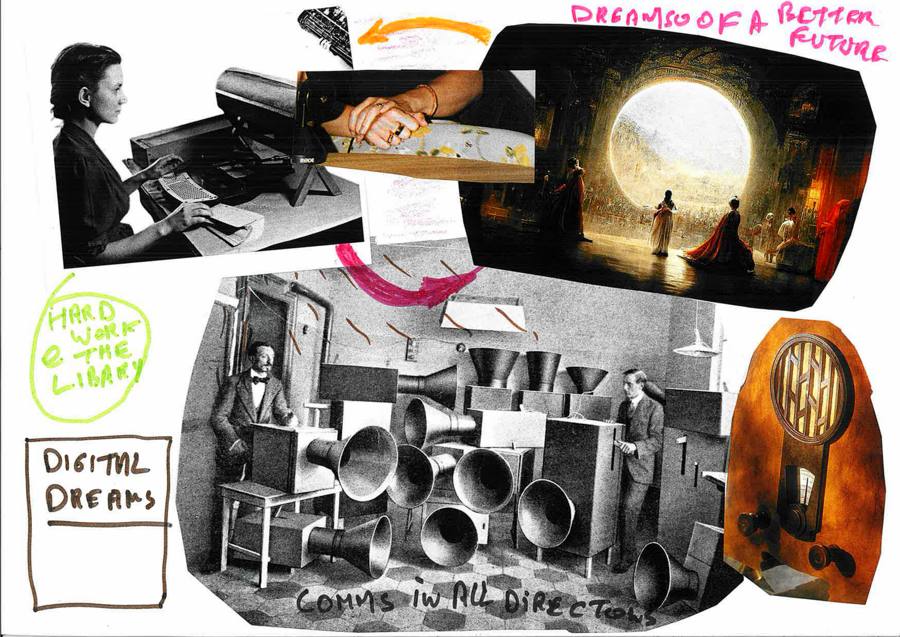
 Image: Max Brückner (1900)
-
Author
- ekip (2026)
-
Audience
-
Geographical scope
-
Resource type
Background
Innovation ecosystems are made up of actors, resources, governance mechanisms that define what activities, collaborations and innovation outputs are possible – and equally, what is not. But most ecosystems were not designed for actors from cultural and creative industries. How can we change that?
Innovation building blocks are levers that we can pull to change & shape innovation ecosystems. They provide a structured way to see what helps innovation processes thrive. There are seven building blocks:
- Sustainable competitiveness
- Regulation & governance
- Social dimension
- R&I, techniques & technological solutions
- Infrastructures
- Skills
- Investment & funding
ekip developed practical tools that will help you assess whether the building blocks in your ecosystem are designed to support innovation processes with cultural and creative actors.
Assess the maturity of your building blocks
Depending on an innovation topic your ecosystem wants to focus on, some building blocks might be more important than others. Use these templates as an exercise to assess the maturity of each building block for your context, and prioritise what needs to be improved.
When doing this exercise ask yourself the following questions:
- How important is this building block for our chosen innovation topic?
- How mature is this building block? What is already there and what is missing?
- To what extent is the building block designed to support cultural and creative industries?
Use this spreadsheet to assign a score from 0-5 for your building blocks and document your responses.
A chart, visualised on the right side of the Excercise sheet will help you visualise your priorities. It is also available for printing.
Definition of innovation building blocks for cultural & creative industries
Building blocks in ecosystems are usually not designed to support the characteristics of cultural & creative industries: small in size, value- rather than profit-driven, reliant on project-based funding.
This table provides examples of how we can reimagine building blocks for creative & cultural industries. Use it for inspiration and as a way to examine whether building blocks in your ecosystem are designed to support culture & creativity.
| BUILDING BLOCK | DEFINITION & EXAMPLES |
Sustainable competitiveness | Business models and growth & resilience strategies: -Environment for new business models -Innovation culture and cross-sectoral mindsets -Support for IPR, distribution, internationalisation and scaling |
| Regulation & governance | Regulatory frameworks and governance models: -Policy experimentation and foresight oriented policy making -Directionality, vision & coordination of ecosystems (incl. multi-level & multi-actor coordination for co-creation & co-design of strategy) -Enabling conditions (e.g. legal certainty, trust, incentives for collaboration) |
| Social dimension | Embedding inclusion, justice, and participation: -Social implication of transition (e.g. digitalisation impacting access to services) -Human-centricity of innovation & ethical development -Involvement of end-users -Connection to Just Transition (e.g. circularity, energy use, sustainable production, green digital infrastructure) |
| R&I, techniques & technological solutions | Tools, methods, and technologies: -Interdisciplinary & transdisciplinary methods -“Hackability” of technologies and processes -Valorisation and uptake of R&I results -Pipelines designed around trust and governance principle to support sharing & collaboration |
| Infrastructures | Physical, digital or social infrastructures: -Intermediary organisations and ecosystem-building functions -Multi-dimensional objectives: balancing cultural, social, and economic goals. -Long-term stewardship, trust-building, knowledge retention and ecosystem learning beyond individual projects -Combining physical services with service provision (advisory, financial support) |
| Skills | Skills, knowledge, and attitudes: -Ecosystem learning -Futuring & speculative methods -Cross-sectoral skill building & sharing -Recognition for diversity of skills |
| Investment & funding | Funding, financing, and procurement processes: -Funding beyond short-term projects and rigid structures -Frameworks that invite risk taking -Access for small actors -Relational funding models -Support for ecosystem building and maintenance |