Building an innovation infrastructure through musical heritage with Studio RE:VIVE
Studio RE:VIVE, despite being a music studio, does not solely exist for music production. It’s about building the conditions in which creativity can happen. This understanding of innovation is refreshingly different from the usual discourse. Instead of AI, platforms or digital tools, it shows that infrastructure, access and creative ambition can themselves be innovative.
-
Author
- Marlene Dirven, ekip (2026)
-
Audience
-
Geographical scope
-
Region
-
Resource type
When discussions about innovation focus on artificial intelligence, digital platforms or emerging technologies, it is easy to overlook the importance of physical spaces. Yet for many creative practitioners, innovation starts somewhere fairly simple: having access to a supportive environment, inspiring tools and the freedom to experiment. Studio RE:VIVE, the first music studio ever operated by a national archive, offers such a space
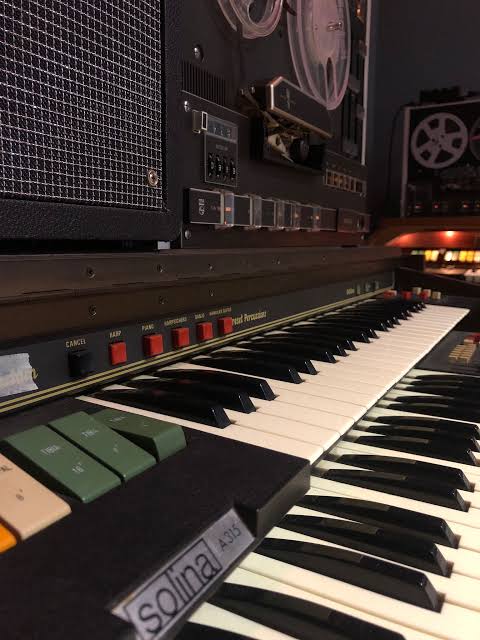
Located within the Netherlands Institute for Sound & Vision, the country’s national media archive, Studio RE:VIVE grew out of the initiative of Gregory Markus, a project lead focused on knowledge and innovation. On its website, the studio describes itself as both “a testament to Dutch audio innovation, a stable place for musicians to come experiment and get hands-on with Dutch heritage” and “a rallying-cry for sustainability” — using what’s available, learning how to repair instead of buying new, and saving as much as possible from the trash, because, as Markus attests, “this old stuff grooves pretty hard.”
Since 2024, the initiative has given composers and musicians (like myself) free access to a recording studio entirely built with analogue instruments and audio equipment from Dutch production. It is not just a recording space; it is an example of how cultural heritage can be an active innovation infrastructure, supporting new creative work while preserving knowledge, craftsmanship and material culture.
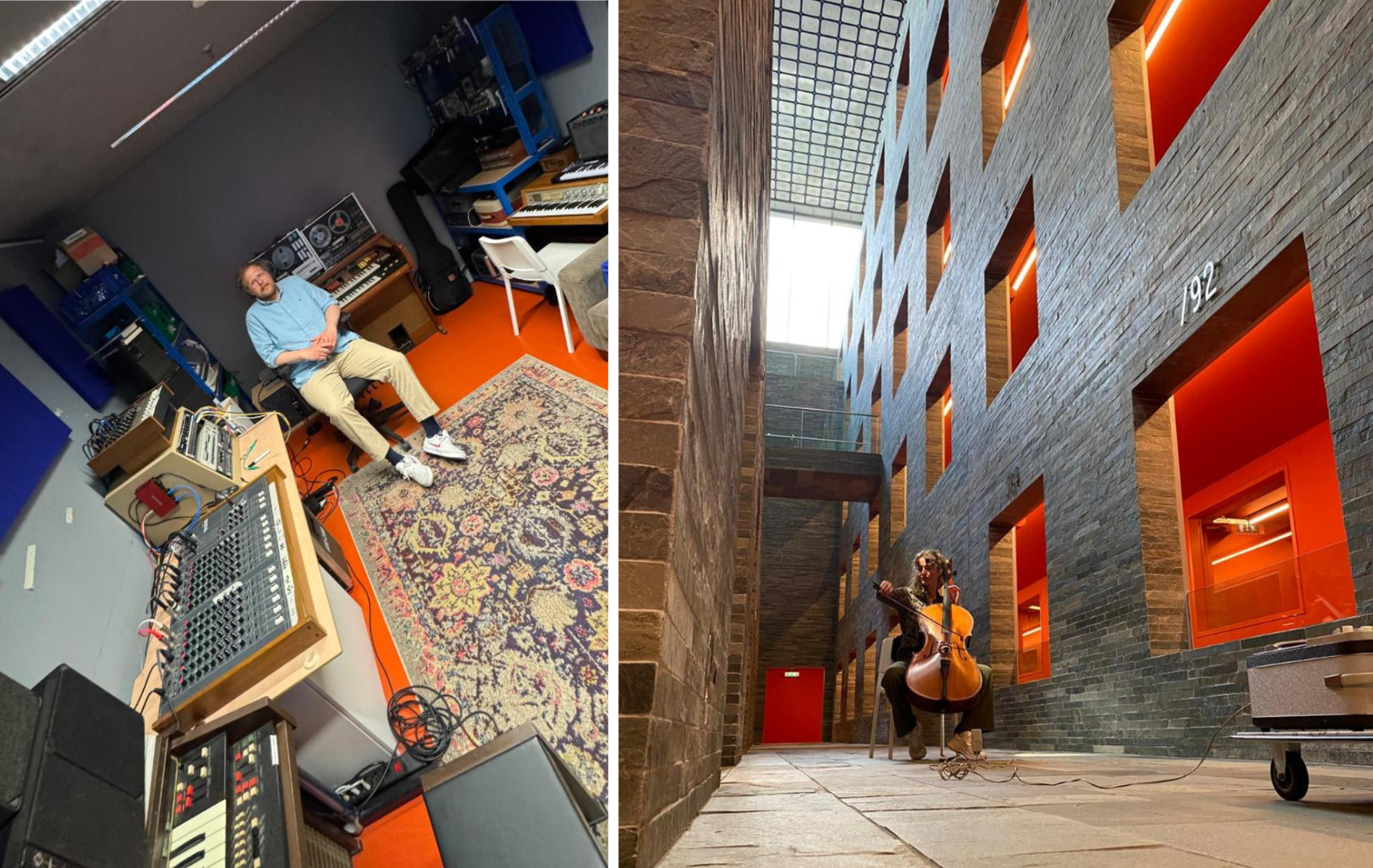
Gregory Markus (left) in Studio RE:VIVE and Marlene Dirven (right) plays the cello at the depot of Sound & Vision
Heritage as infrastructure
Studio RE:VIVE never intended to become another commercial recording studio. Its simple but guiding principle has always been to keep Dutch musical heritage alive by continuing to use it. As Markus, explains: reproducing the business model of existing studios would have made little sense in an era where affordable home recording has transformed music production completely. Instead, the studio developed around a different question: how can heritage collections become something people actively create with?
The studio is fully booked year-round, with musicians regularly reaching out to make use of the space. Many are surprised to learn that they can access it free of charge, and are often eager to return. In doing so, they gain access to instruments and technologies that might otherwise remain hidden away in collections or disappear into private ownership. By bringing these objects back into use, the studio gives them a continued presence in contemporary music and keeps this heritage alive through practice rather than preservation alone.
Innovation doesn’t need to be spectacular
For Markus, innovation is often misunderstood by only referring to technological breakthroughs or futuristic designs. Instead, he argues that genuine innovation comes from “doing something no one else is doing.” Even if the idea seems deceptively straightforward.
“Innovation doesn’t need to be spectacular. It can be the simplest thing you can think of.”
Studio RE:VIVE is an example of this philosophy. While analogue equipment may seem old-fashioned, maintaining and reusing vintage technology offers a different kind of innovation: instead of producing and consuming new resources, the studio restores, repairs and continues using equipment that was built to last. Many of the studio’s machines date back to the 1950s or 1960s, but because they’re almost entirely analogue or mechanical, they remain repairable. This way, even equipment from the 1950s can still be used and enjoyed today. The studio takes the model of a normal recording studio, but adds a strong and committed Dutch heritage spin on it, which makes it innovative. In this sense, sustainability is embedded directly into the infrastructure of the studio itself.
Creating new heritage
The studio is not only preserving the past. Each recording made at Studio RE:VIVE becomes part of a continuing story of Dutch musical heritage. Historical equipment becomes relevant again through contemporary music, while musicians discover forgotten technologies that inspire their creative ideas.
Despite little attention given to Dutch musical heritage, the initiative has sparked networks well beyond the studio. Markus describes growing connections with instrument restorers, boutique pedal builders, collectors, former manufacturers and people preserving specialist knowledge about Dutch musical production. Although this community is often invisible, it represents an ecosystem of expertise that might otherwise disappear, and that comes together in this hub that the studio provides.
Small infrastructure, lasting impact
Studio RE:VIVE operates with only one manager, two part-time volunteers and a very modest space and resources. It doesn’t need to grow bigger, but it needs continued use. For Markus, the studio’s success is measured less by expansion than by continuity: keeping the equipment working, enabling new creative projects and ensuring future generations experience this part of Dutch cultural heritage, not only by looking but by playing and interacting with it. He hopes the studio remains a place that people return to, introduce to others and collectively care for.
Its long-term impact may only become visible years from now, he argues. Maybe when artists, inspired by the studio, begin preserving their own heritage equipment instead of looking for the newest latest technology. As Markus puts it: “Ask me again in ten years.”
Inspiration for innovation actors
Studio RE:VIVE shows us that innovation infrastructure does not always require large-scale investment or advanced technologies. Sometimes, creating the conditions for innovation means opening access to existing cultural resources and allowing creative practitioners to reinterpret them.
For organisations looking to strengthen innovation within the cultural and creative industries, Studio RE:VIVE offers several insights:
- Innovation infrastructure can be small, local and community-driven.
- Heritage collections can become an active resource for contemporary creation rather than static archives.
- Sustainability can be achieved through the repair and reuse of existing materials.
- Creative practitioners can generate innovation when they are given access to a supportive environment and the right tools.
- Public institutions can play an important role in creating the conditions for experimentation, particularly where commercial models do not provide them.
In a society where accelerators and incubators are common in the technology sector but less so in the cultural and creative industries, Studio RE:VIVE shows how public institutions can build infrastructures to help flourish creativity while also preserving cultural heritage.
For Markus, however, this philosophy extends beyond the studio itself. When asked about his ideal vision for the future of creatives in innovation policy, his answer is deliberately grounded: “Get out of the city.” Rather than concentrating investment in large urban cultural hubs, he argues for supporting initiatives in the countryside and in towns that are struggling to survive. This does not necessarily mean building new, specialised cultural infrastructure, but investing in basic, accessible spaces like a functioning community centre where people can meet, create and do different things. Or, as Markus puts it, “Spread the wealth.”
For more information on STUDIO RE:VIVE, see here.