AI and Cultural and Creative Industries
 New European Bauhaus – CCIs enabling green transition
 Immersive Media
 Crafts-led Innovation
 Platformisation of the Music Industry
 Inclusivity in Video Game Industry
 Cross-Innovation with Performing Arts
 Fashion Transition: Eco-Design for Circularity
 Cultural Heritage Institutions within Open Innovation Ecosystems
 New funding models for creativity and innovation
 Spaces, infrastructures, and ecosystems for CCIs
 Reimagining Deep-Tech
 Digital Commons
“You must always think like other people”
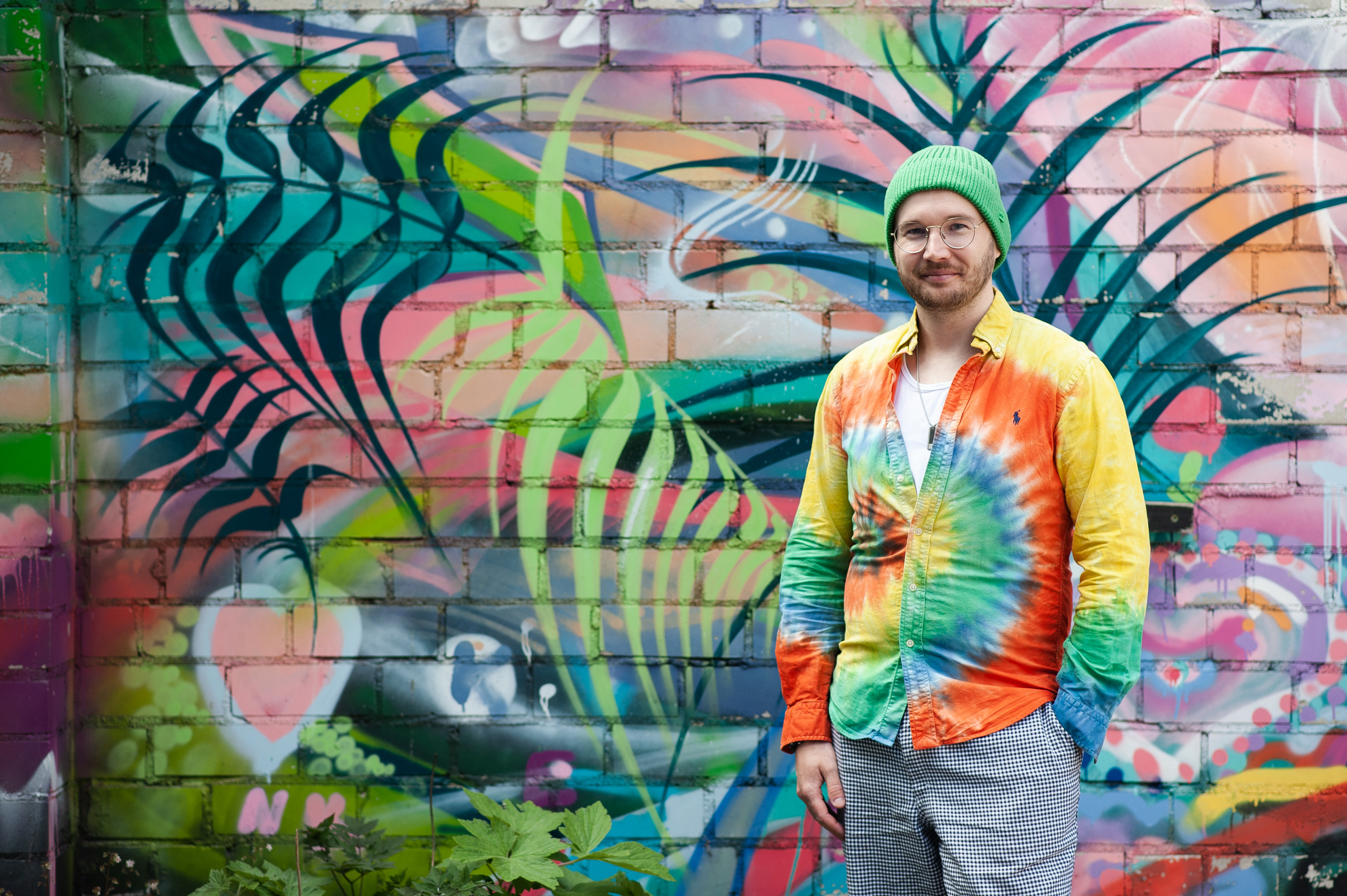
How does culture speak the language of data, policy, and innovation? Part of a series of portraits on Europe’s creatives, this story explores Hegert Leidsalu’s journey from event organisation to ecosystem building, revealing how connection, communication, and shared intelligence can help culture become a central force in urban development.
-
Author
- Bodil Malmström, ekip (2026)
-
Audience
-
Geographical scope
-
Region
-
Resource type
Hegert Leidsalu describes himself, half-jokingly, as “the king between everything.” It’s not a title you’ll find in any official job description, but it may be the most accurate way to understand his role.
By day, Hegert Leidsalu is a service development specialist in the cultural department of Tartu in Estonia. In practice, that means translating the intangible value of culture into something measurable—data, reports, arguments that can survive budget meetings and political scrutiny.
“My everyday job is to try to measure the impact of culture,” he explains. “I work with data, IT systems and legislation. I’m between every part of this ecosystem.”
It’s a position that demands constant perspective-shifting. Artists, policymakers, event organisers, audiences—each speaks a different language. His job is to understand them all.
“You must always think like other people,” he says. “Not just from your own point of view, but what event organisers think, what officials think, what politicians think, what the audience thinks—and try to bring these thoughts together.”
From the Field to the System
Before Hegert Leidsalu was analysing culture, he was creating it.
His background lies in event organisation—a world of unpredictability, improvisation, and adrenaline. It’s an experience that still shapes how he sees innovation today.
“What is exciting about organising an event?” he reflects. “You can plan everything, but always something happens that you couldn’t plan. You have to react very operatively.”
That unpredictability, he argues, is where innovation lives.
“When you don’t have enough money, you have to think differently. You test new methods, new ways. I think that’s the key of innovation.”
Today, however, Hegert Leidsalu operates at a different altitude. Instead of producing events, he measures their ripple effects—feeding insights upward to department heads and, ultimately, to politicians deciding where public money goes.
The Problem of Silos
But if his role connects perspectives, the system around him remains fragmented.
“We are siloed,” Hegert Leidsalu says plainly. “We do our things, we make our solutions, but we don’t think or ask what the other parts are doing.”
The gaps are not abstract, they are structural. Tourism, cultural events, conferences, entrepreneurs: all operate in parallel, rarely intersecting.
“Maybe the biggest problem is communication,” he says. “Between tourism organisers, entrepreneurs, conference organisers, event organisers.”
Strategies exist—Tartu has them—but they often stop short of execution.
“We have a cultural strategy,” Hegert Leidsalu notes. “But unfortunately it’s just strategy. We don’t have an action plan.”
What’s missing is not necessarily knowledge, but coordination and, perhaps, courage.
“Someone has to say: do it together,” Hegert Leidsalu says. “Sometimes we should be more brave. Not afraid to say we are not doing something.”
Why ekip Academy?
It was this sense of fragmentation that led him to the ekip Academy in Tallinn June 2026, alongside colleagues from the creative industries and tourism foundations.
”We came as a diverse group to take the time together to focus on a shared topic and explore it from different perspectives.”
Hegert Leidsalu arrived not looking for theory, but for alignment.
“I hope we can do better cooperation,” he says. “Maybe we will see that we have the same problems all over Europe.”
That realization alone, he suggests, would make the experience worthwhile: confirmation that silos are not a local failure, but a systemic condition.
At the same time, he is searching for practical tools—ways to turn insight into action.
Back home, he is already experimenting. One pilot project involves collecting audience data from major events across the municipality, analysing it centrally, and redistributing insights across the ecosystem.
“We make a questionnaire, organisers send it to audiences, and then we analyse and share the results,” Hegert Leidsalu explains. “We can be this center part.”
It is a small but significant shift: from isolated efforts to shared intelligence.
A Simple Idea: Put People in a Room
For all the complexity of systems and strategies, his proposed solution is strikingly simple.
“I think we should just gather people into one room a few times a year,” Hegert Leidsalu says.
Not for formal meetings, but for familiarity.
“They see each other, they get to know each other. Then it’s easier to call or write someone you know. If you’ve had coffee together.”
In an era of digital platforms and policy frameworks, his insight is almost disarmingly human: innovation ecosystems depend on relationships, not just structures.
Culture as an Innovation Engine
Looking ahead, he believes culture is already an underrecognised driver of innovation, particularly in areas like sustainability.
“Somehow culture now is an innovation leader in some parts,” Hegert Leidsalu says.
But without integration into broader innovation systems, its impact risks being diminished.
“If we are not invited,” he warns, “we may miss people’s courage to do things, people’s innovation thinking, all the things that are inside people.”
In other words: the loss is not just economic, but human.
Ten Years Ahead
Ask him where he sees himself in a decade, and his answer is unexpectedly grounded.
“Maybe I want to be back on the field. Organising things. Not analysing.”
It’s a return to immediacy, to the unpredictability that first drew him into the cultural sector.
Because for all his work with systems and strategies, he hasn’t lost sight of what culture ultimately is: something lived, not just measured.
And perhaps that dual perspective, both inside the system and rooted in practice, is exactly what makes him, in his own words, “the king between everything.”
A bridge-builder in a fragmented landscape, working to ensure that culture is no longer the missing piece, but a central force in Europe’s innovation future.