AI and Cultural and Creative Industries
 New European Bauhaus – CCIs enabling green transition
 Immersive Media
 Crafts-led Innovation
 Platformisation of the Music Industry
 Inclusivity in Video Game Industry
 Cross-Innovation with Performing Arts
 Fashion Transition: Eco-Design for Circularity
 Cultural Heritage Institutions within Open Innovation Ecosystems
 New funding models for creativity and innovation
 Spaces, infrastructures, and ecosystems for CCIs
 Reimagining Deep-Tech
 Digital Commons
From creative economy to creative growth
How can a country build a creative economy from the ground up? Part of a series of portraits on Europe’s creatives, this story follows Kushtrim Canolli’s journey from lawyer to policy-maker, exploring how he is connecting culture, innovation, digitalisation, and economic development to design a new model for Kosovo’s creative future.
-
Author
- Bodil Malmström, ekip (2026)
-
Audience
-
Geographical scope
-
Region
-
Resource type
As Kosovo drafts the blueprint for its creative economy, one of its key architects is a lawyer-turned-policy-maker who now finds himself at the intersection of law, innovation, and cultural transformation. At the ekip Academy, Kushtrim Canolli searched for more than inspiration—he looked for a working model for a new national system.
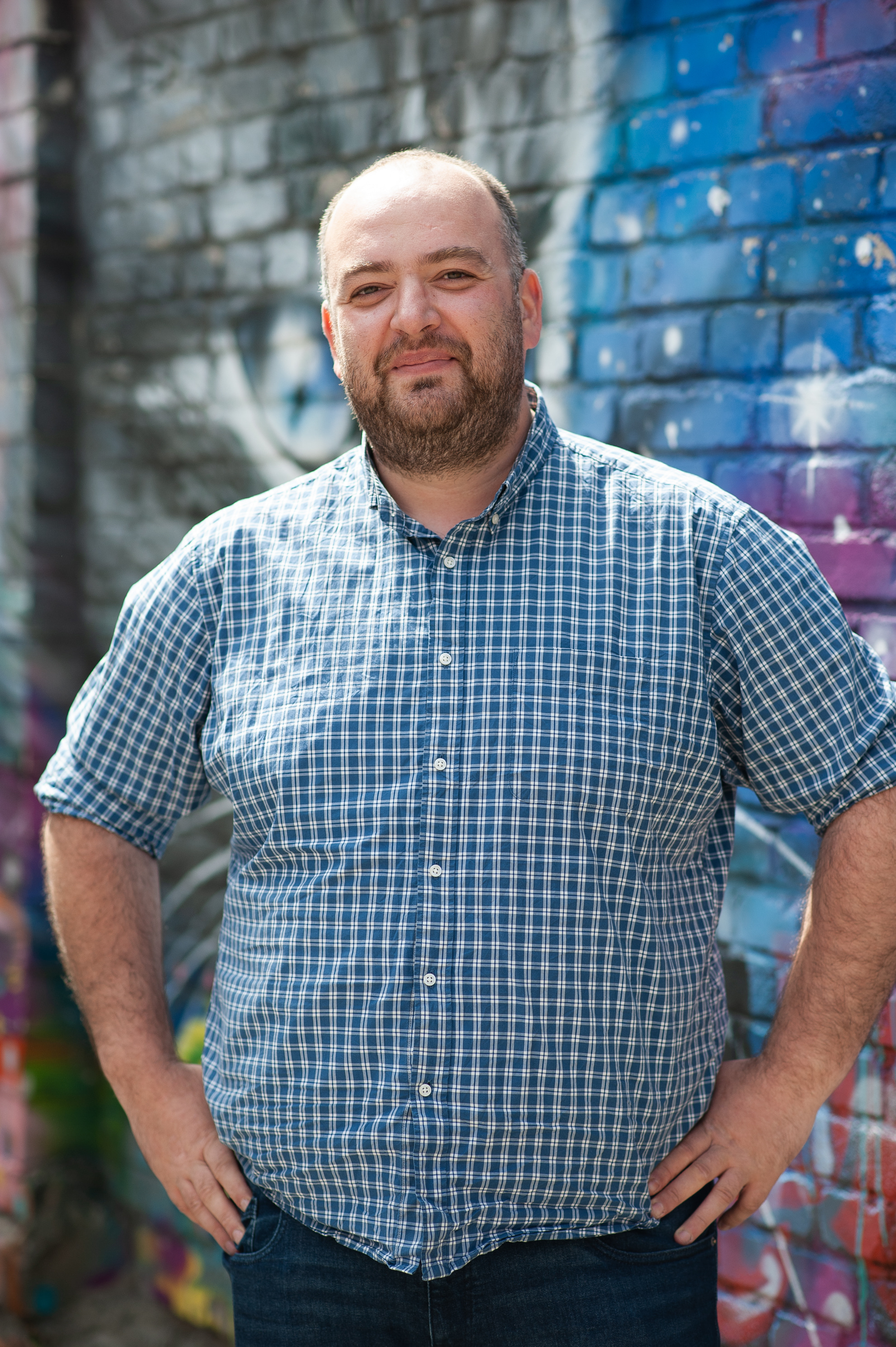
In the policy landscape of Kosovo, Kushtrim Canolli occupies an unusual position. Trained as a lawyer, he never practised in the traditional sense. Instead, his career moved quickly into policy-making, public administration, digitalisation, and now the ambitious task of shaping Kosovo’s creative economy strategy.
“I am a lawyer academically speaking,” he says, “but I never actually worked as a lawyer. I was always in policy-making, combining legal issues, security, and public administration.”
Today, he chairs the country’s emerging strategy for the creative economy—still awaiting formal adoption, but already functioning as a framework for cross-sector collaboration. For Kushtrim, this is not simply cultural policy. It is economic architecture.
“We try to use creativity and culture in the function of the economic ecosystem,” he explains. “We combine different sectors, different fields, different stakeholders for the same aims.”
It is a deliberate shift in thinking for Kosovo, a country still defining how culture, innovation, and economic development intersect. Kushtrim is careful not to overstate novelty, but he is clear that the direction is new.
“This is quite a new concept for us,” he says. “We worked with international experts. We are trying to learn from others, from their environments, even from their mistakes.”
Learning from others, moving faster
At the ekip Academy hosted in Tallin June 2026, Kushtrim arrived with a dual objective: to absorb comparative experience and to test Kosovo’s emerging model against European practice.
One reference point that stood out for him was Poland’s “Creative Poland” initiative, which he sees as a practical benchmark for countries at an earlier stage of development.
“I learned from Poland,” he says. “They started only a few years ago. It gives us ideas on how we should do it in our country.”
The attraction of ekip, however, is not only methodological. It is relational.
“Especially inspiration,” he adds. “Because different countries bring different ideas. Even Estonia—how they transformed old infrastructure into something completely new—that is quite impressive.”
In his view, innovation is not abstract. It is deeply embedded in place.
“Innovation is always linked with environment,” he reflects. “Where you are and what you do. If we compare it, home is where the heart is, then innovation is where the environment for innovation is.”
Alignment rather than expansion
Kushtrim’s optimism about Kosovo is grounded in what he describes as structural potential: a young, creative population and a cultural sector already exporting talent globally.
“We have a very young population,” he says. “Very creative. We have artists like Dua Lipa and Rita Ora who are already influencing the global creative industry.”
Yet this potential exists alongside a familiar constraint: limited public resources and competing national priorities.
“Kosovo is still a poor country,” he acknowledges. “Government incentives are not at the level they should be. Everything is a priority—welfare, health, development. It is difficult to allocate proper budgets for creative industry.”
The solution, in his view, lies in alignment rather than expansion: leveraging talent, international partnerships, and private-sector momentum alongside government action.
“What we hope for is synergy,” he says. “Government actions combined with talent and potential. They must go hand in hand.”
From strategy to action
If there is one frustration Kushtrim brings with him from home, it is the gap between strategy and implementation.
“We have strategies,” he says. “But sometimes we don’t have action plans.”
What ekip offers, he argues, is not only content but method, a way of turning policy into practice through structured collaboration.
“One of the key lessons,” he explains, “is that first you need to understand, then you can support and help. To understand, you have to be with people, not just design from above.”
That shift—from designing for stakeholders to designing with them—is central to what he intends to take back to Kosovo.
“The exercises here are very necessary,” he says. “To bring stakeholders together, identify them, work with them, understand them.”
Creativity without boundaries
One of the more surprising insights for him at ekip is the idea that creativity is not sector-specific, but systemic.
“Everything can be used in a creative way,” he says. “Not just what we see as culture or art, but everything. Health, environment, employment and even military, although that is different.”
He refers to a metaphor he encountered during the ekip Academy programme.
“Creativity is like birds,” he says. “Birds never forget to fly. Wherever you go, whatever you do, you can be creative.”
For Kosovo, this means breaking out of imported templates. While the country has often adopted models from abroad, Kushtrim now sees the need for adaptation rather than replication.
“In Kosovo we sometimes imitate other countries,” he says. “But it doesn’t always function the same way. We need our own model.”
Still, imitation can be a starting point—if it evolves.
From silos to systems
At the heart of his policy ambition is a structural problem familiar across Europe: fragmentation.
Kushtrim describes a system where tourism, culture, entrepreneurship, and events operate in parallel rather than in coordination.
“What we are trying to do,” he says, “is bring all sectors together. Because every sector can fit into this system.”
His strategy for overcoming fragmentation is simple but demanding: continuous stakeholder engagement, shared platforms, and a shift in institutional culture.
“Everything depends on communication,” he says. “We need to gather people, not just once, but regularly. When people know each other, cooperation becomes natural.”
A future in systems, not stages
Looking ahead, Kushtrim does not see himself returning to law or classical administration. Instead, he envisions a career embedded in systems change, particularly at the intersection of innovation, digitalisation, and creative policy.
“In five years,” he says, “I see myself still in this sector, but more focused on digitalisation, innovation, and artificial intelligence.”
His role, as he sees it, will shift from architect of strategy to enabler of ecosystems.
“Not as a creator,” he clarifies, “but as someone who incentivises creation through government measures.”
At a national level, he hopes Kosovo will transition from building foundations to scaling impact.
“From creative economy to creative growth,” he says. “That is the direction.”
And if that happens he hopes to remain at the centre of it.
“Why not me being on the top of it?”