AI and Cultural and Creative Industries
 New European Bauhaus – CCIs enabling green transition
 Immersive Media
 Crafts-led Innovation
 Platformisation of the Music Industry
 Inclusivity in Video Game Industry
 Cross-Innovation with Performing Arts
 Fashion Transition: Eco-Design for Circularity
 Cultural Heritage Institutions within Open Innovation Ecosystems
 New funding models for creativity and innovation
 Spaces, infrastructures, and ecosystems for CCIs
 Reimagining Deep-Tech
 Digital Commons
Too Many Ambitions, Not Enough Connection: Where’s the Narrative That Makes It All Matter?
What happens when policy-making becomes an exercise in listening, connecting, and creating space for what emerges? Part of a series of portraits on Europe’s creatives, this story explores Anita Swinkels’ journey across education, culture, and municipal strategy, revealing how curiosity, collaboration, and openness can help cities build more meaningful creative ecosystems.
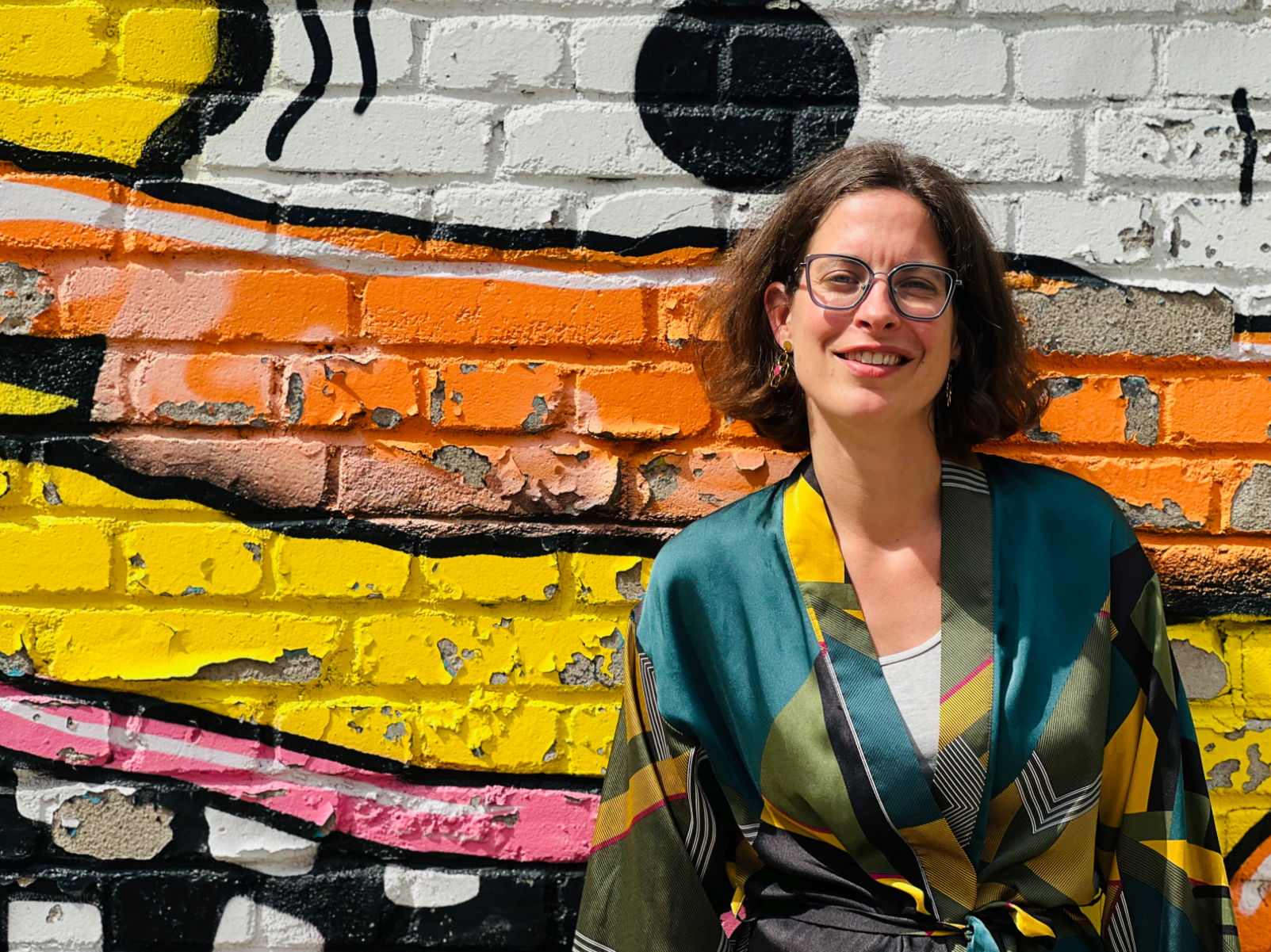 Photo by Bodil Malmström
-
Author
- Bodil Malmström, ekip (2026)
-
Audience
-
Geographical scope
-
Region
-
Resource type
In the often slow-moving corridors of municipal governance, Anita Swinkels is attempting a subtle but profound intervention. She calls it “listening,” though the depth of her approach suggests something closer to a systemic reorientation that shows how culture, creativity, and collective life are interconnected.
Today, Anita Swinkels works as a strategic policy adviser in the Dutch city of Breda, operating at the complex intersection of culture, economy, and public value. From an island upbringing to the dense urban fabric of Rotterdam, from years in education to roles within cultural institutions, and now into policy reveals a deeper, more persistent inquiry: what is culture actually for in society, beyond its visible outputs?
From absence to overload
Anita´s early experiences did not just expose her to a lack of cultural infrastructure; they shaped her sensitivity to something more intangible: the absence of narrative, of shared meaning, of collective movement.
“I grew up in a place where culturally, very little was happening. Not just in terms of events, but in terms of identity,” she says. “Then I moved to Rotterdam, and suddenly there was an abundance. Institutions, programming, diversity, everything you might expect. But even there, something felt off. There was activity, but not necessarily connection. There wasn’t a shared atmosphere, no real sense of movement that people felt part of.”
She spent more than a decade teaching, working closely with individuals, shaping perspectives at a personal level. But over time, she began to feel the limitations of that scale.
“In the classroom, you can influence individuals in meaningful ways, and that matters deeply. But I started to feel that if I wanted to contribute to broader change I needed to work on a different level. Not just individual impact, but what I would call inhabitant-level impact: shaping the conditions people collectively exist within.”
Her transition into the cultural and creative industries (CCI) brought her closer to that ambition, but also revealed a persistent disconnect.
“There’s a lot of energy in programming—events, festivals, initiatives, all of which are valuable. But I kept asking myself: what does it actually take for a place to become more than a collection of programmes? What allows it to become a living, breathing cultural ecosystem with direction and meaning?”
A different kind of policy space
At the municipality of Breda, Anita describes her role in terms that resist bureaucratic heaviness.
“I often call it a playground—not because it’s without structure, but because it allows for exploration,” she explains. “Of course, there is hierarchy; that’s part of any institutional setting. But the real work happens outside those formal lines: in listening carefully, in connecting seemingly unrelated dots, and sometimes in deliberately unwiring connections that no longer serve us.”
Her work spans a wide network of stakeholders, from governmental bodies to emerging sectors like gaming, where she acts as an account holder for Dutch Game Week. Yet she does not frame her role as managing complexity, but as reshaping it.
“The question I keep returning to is: how do we create a common narrative that not only reflects where we are, but makes visible what is needed for the next step? Not a fixed plan, but a shared direction that people can move within.”
Embracing not-knowing
This line of questioning eventually led Anita to the ekip Academy in Tallinn June 2026. Despite her extensive experience, she arrived with a perspective that challenges conventional expertise.
“When I thought about the most urgent challenge, I realised it might actually be this: accepting that you don’t need to know everything in advance,” she says. “In policy environments, there’s often pressure to present certainty, to have answers, frameworks, best practices ready. But that can close down the very conversations we need.”
In contrast to the polished narratives that dominate the field, she advocates for a more open, vulnerable stance.
“Everyone is presenting success stories, perfect examples of what worked. And those are useful, of course. But there is also strength in saying: we don’t fully know yet. We are still figuring this out. That kind of honesty can create space for more meaningful dialogue, for approaches that are actually responsive rather than predefined.”
What she found at ekip was not a set of definitive answers, but something she considers more valuable.
“Instruments guided not by opinion or ideology, but anchored in facts—adaptable tools that enable the conversations you need to have. That flexibility is essential.”
Europe’s unrealised potential
Anita´s reflections extend beyond her local context to a broader European scale. Here, she identifies a growing tension between awareness and action.
“There is a widespread understanding that things are changing and that cultural and creative sectors are becoming increasingly important, not just socially but economically. But at the same time, there is a kind of hesitation. People recognise the shift, but they are not fully acting on it.”
For her, inclusivity within CCI is not merely a value-driven goal; it is structurally essential.
“If the cultural and creative industries continue to be treated as an add-on we are not just limiting them. We are limiting ourselves. We risk missing the full potential of what these sectors can contribute.”
Importantly, she does not see creativity itself as being at risk.
“Creativity will always exist. People will always create, that’s not something that disappears.”
What is at stake, instead, is the scale and depth of its impact.
“Europe has the capacity to be much more—to lead, to innovate, to redefine how culture and economy interact. But if it doesn’t take this seriously, it is, in a way, choosing to remain basic. And that’s a missed opportunity on a systemic level.”
Process over prescription
Anita´s own ambitions resist traditional metrics of success. Rather than focusing on predefined outcomes, she emphasises process and emergence.
“I’m not interested in starting from a fixed idea of what the result should be,” she explains. “I would rather create the conditions for something to happen, and then observe what emerges from that. It’s about enabling, not dictating.”
This philosophy extends to her view of European collaboration.
“We don’t all need to replicate the same models or follow identical paths. Diversity in approaches is valuable. But we can and should explore how our differences can complement each other, how we can create mutual benefit rather than isolated progress.”
At ekip Academy she had an interesting exchange with the team from Kosovo.
“They are operating from a completely different starting point, with different resources and challenges. But that doesn’t make the connection less relevant. On the contrary, it highlights how much we can learn from each other if we approach it with openness.”
What ekip made visible
After only a few days at the ekip Academy, Anita does not describe a transformation, but rather a clarification.
“I’ve always acted based on what I felt was needed, guided by intuition and experience,” she says. “What this experience gave me is the sense that this intuition is aligned with something larger. We are not just experimenting, but actually moving in a direction that is needed.”
That shift—from uncertainty to orientation—has practical consequences.
“It provides focus. It allows you to pause, even briefly, and ask: what am I doing, and why does it matter? Those moments of reflection are incredibly valuable in environments that are otherwise very fast-paced.”
More than a personal insight, she sees this as something that can ripple outward.
“You can take these perspectives back into your own ecosystem, adapt them, apply them. And that’s where real change happens. Not in isolated experiences, but in how they are translated into different contexts.”
The quiet shift
Ultimately, Anita´s work is not about imposing new frameworks, but about shifting how people perceive and engage with existing ones. Her approach is grounded in curiosity, attentiveness, and a willingness to remain open.
“What is actually happening around us, beneath the surface? What can we improve? Not in abstract terms, but in ways that people can feel? What do we genuinely need, and equally important, what do we have to offer to others within a shared system?”
It is a form of politics grounded not only in control and focus—you must understand your actions—but also in connection; not in certainty, but in continual inquiry.
“What matters is that we remain willing to move, to question, to adapt. Because in the end, progress doesn’t come from knowing everything, it comes from continuing forward together.”