Where restoration meets innovation: Scuola di Restauro di Botticino in Milan’s MIND District
The Scuola di Restauro di Botticino trains conservator-restorers to plan and direct interventions, not merely execute them. Through thousands of laboratory hours on protected artworks and a network spanning museums, universities, and the MIND innovation district, it shows how heritage conservation sits at the strategic core of cultural innovation.
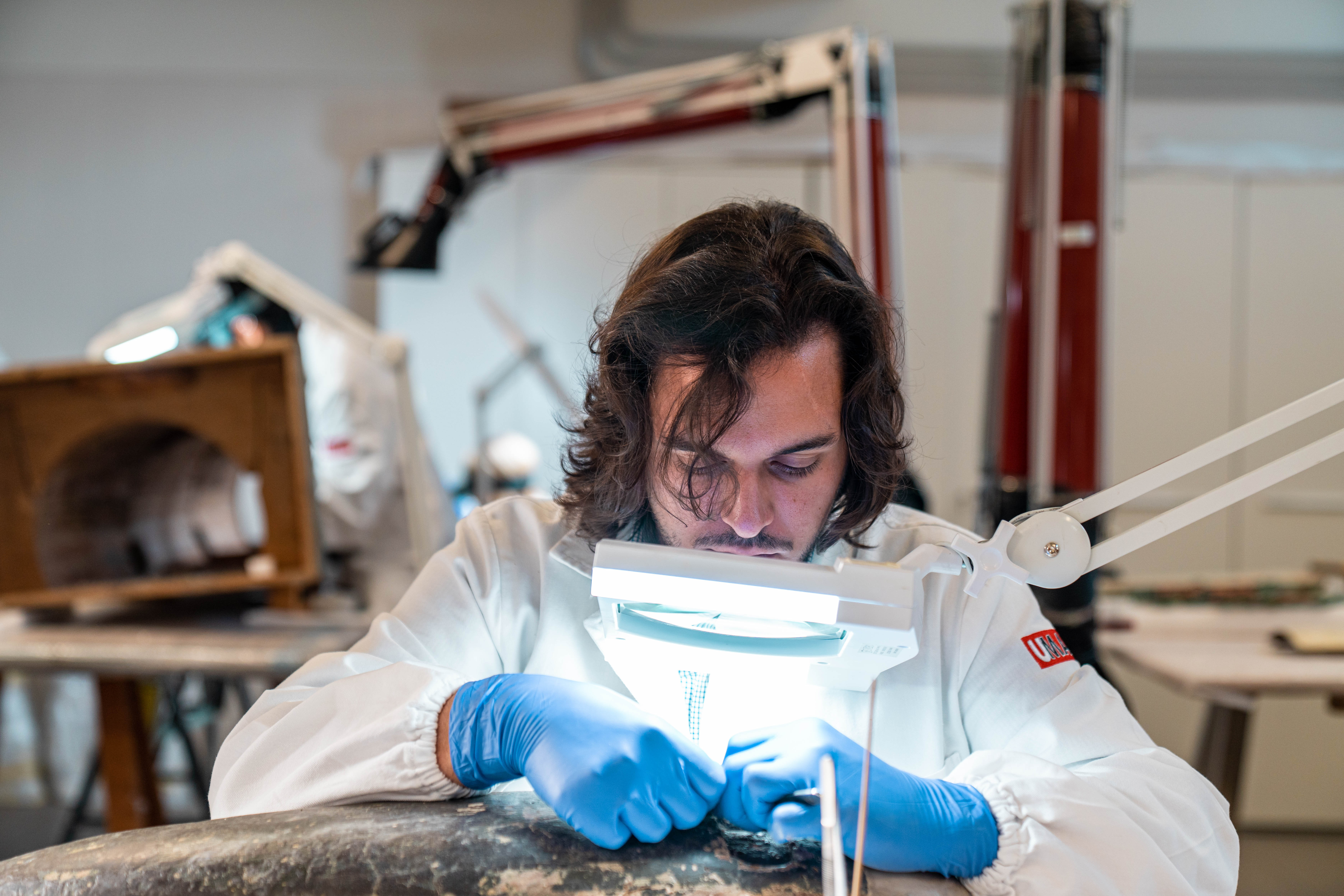
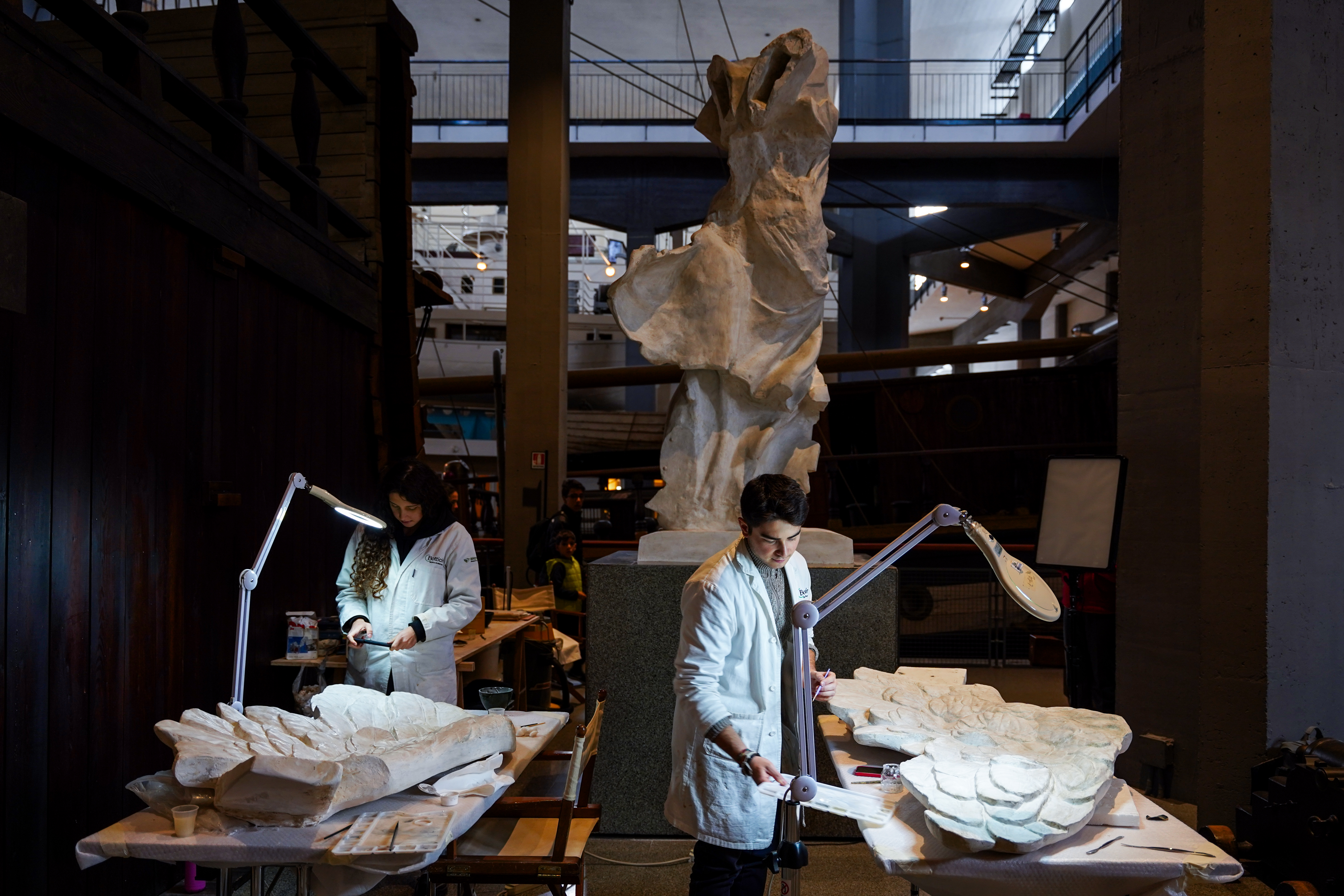
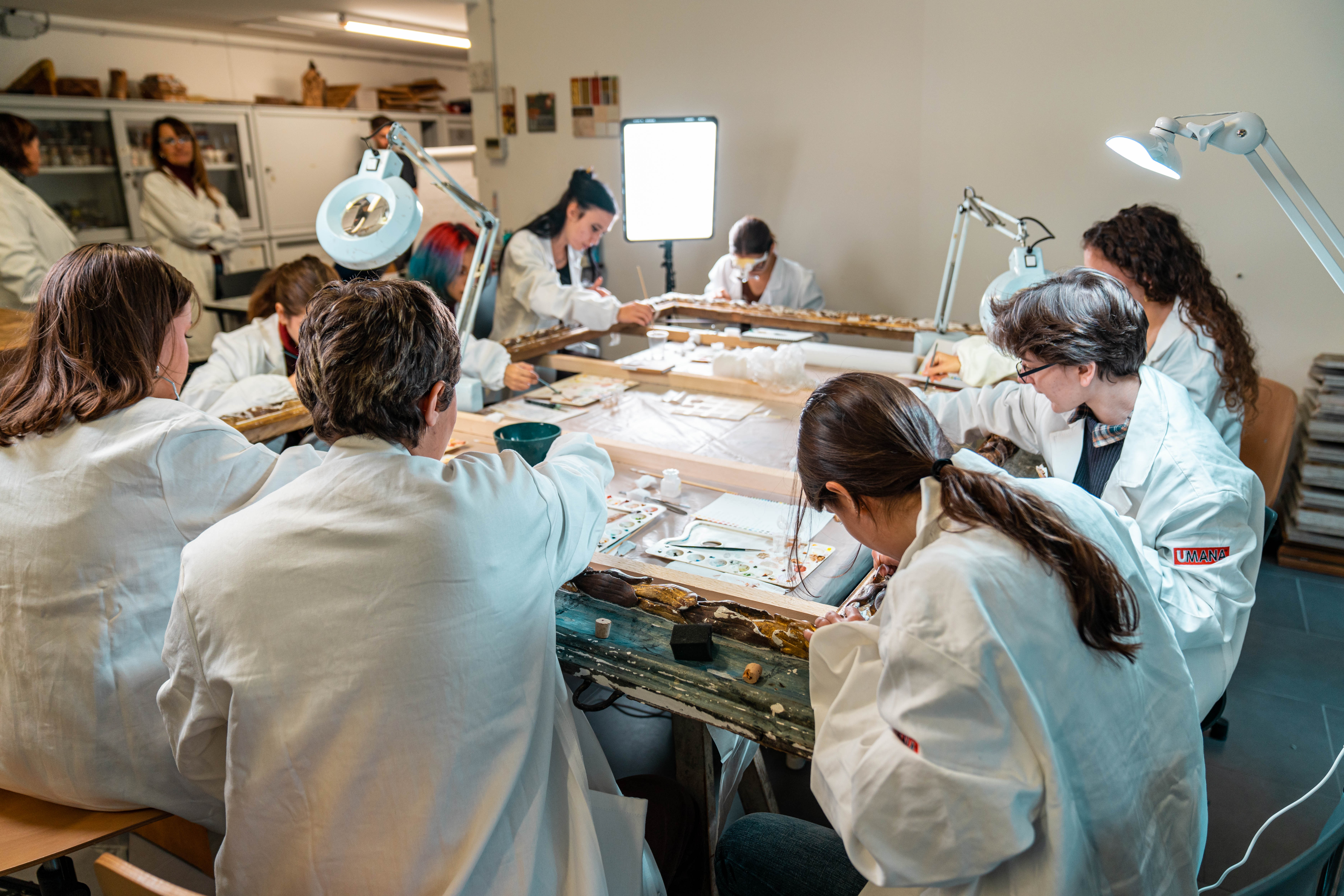
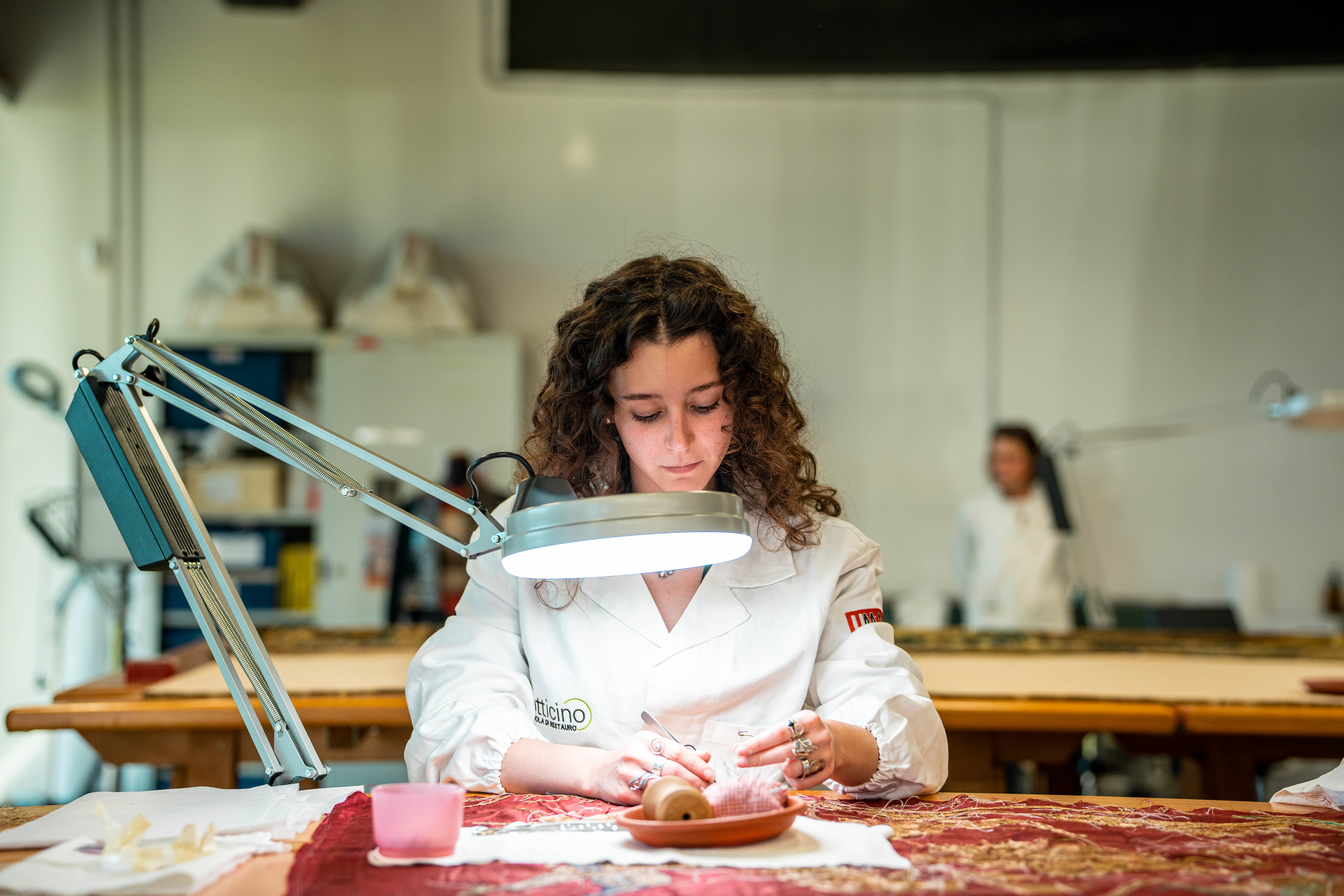
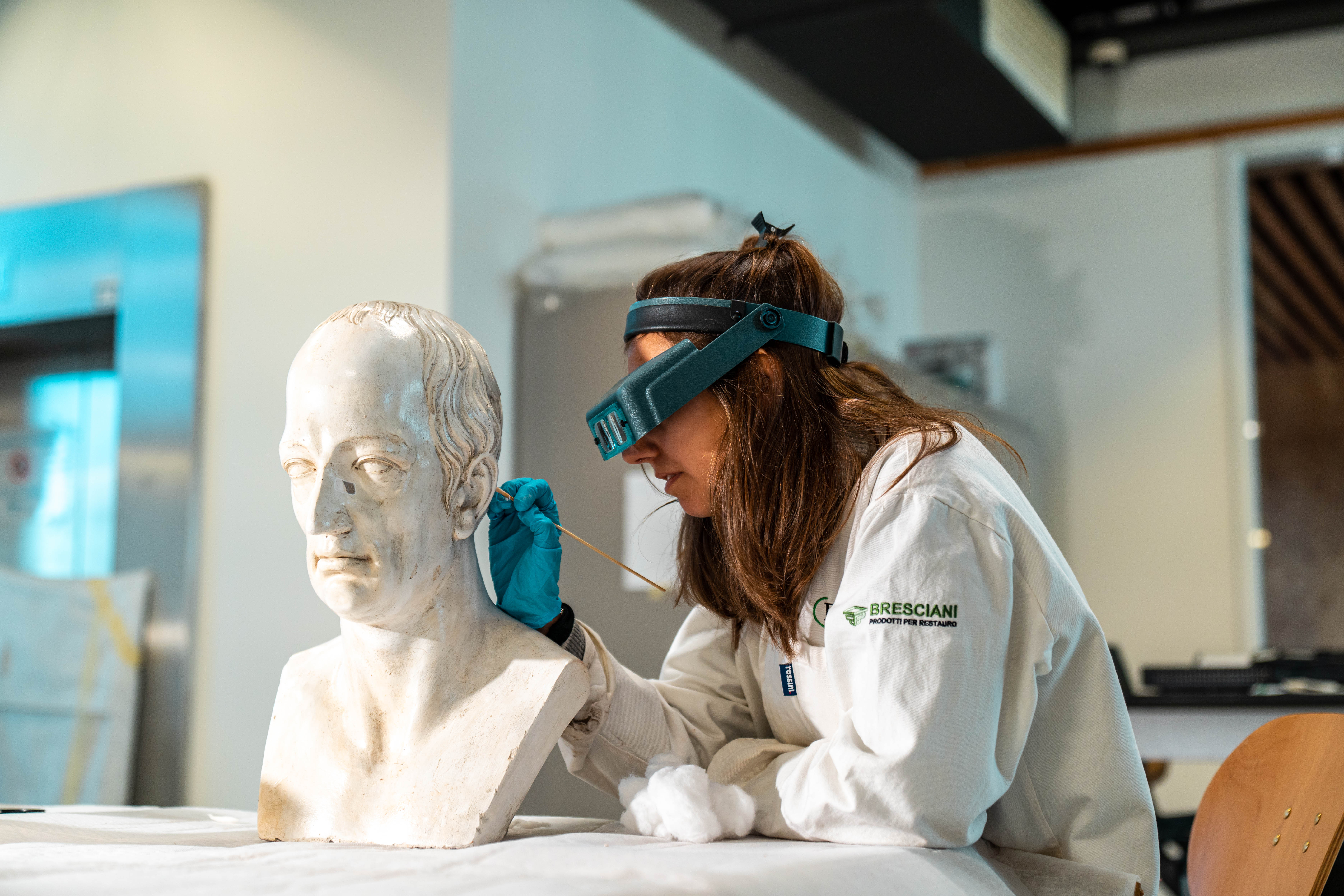 Activities in the school’s restoration workshops (all images courtesy of Scuola di Restauro di Botticino)
-
Author
- Silvia D'Ambrosio, ekip (2026)
-
Audience
-
Geographical scope
-
Region
-
Resource type
Introduction
Founded in 1974 with the support of the Lombardy Region, on the initiative of Fondazione Enaip Lombardia and with curricular guidance from the Istituto Centrale per il Restauro, the Scuola di Restauro di Botticino is one of Italy’s established schools for the conservation and restoration of cultural heritage. Now based in Milan, having relocated from Botticino, and managed by Valore Italia, the school delivers a five-year single-cycle master’s degree that qualifies graduates directly for the profession of restorer. Its director, Arianna Beretta, a contemporary art historian who has worked across galleries, cultural associations, and advanced cultural training, has led the school’s Milan chapter since 2022.
The school reframes restoration as a strategic, project-led practice rather than a purely manual craft. As Beretta puts it, the contemporary restorer is no longer an artisan executing a repair but the professional who plans the intervention and reads an object on two levels at once: as matter to be understood scientifically, and as the carrier of an artist’s history, identity, and intent. Deciding how far an intervention can go is therefore a strategic decision, made at the intersection of the humanities, science, and skilled hands. This is the integrative role, able to convene and mediate across disciplines, that the school cultivates in its students.
Organizational Context
The school operates within a national framework that has reshaped the profession over the past fifteen years. Until 2010, restoration was taught through a three-year program for restoration technicians. The introduction of the national degree in Conservation and Restoration of Cultural Heritage, a five-year single-cycle master’s that confers professional qualification, redefined the field. The qualified restorer can now sign restoration projects on protected assets and act as works director, whereas the technician operates as the hands-on executor and cannot independently sign projects on works under the protection of the Soprintendenza.
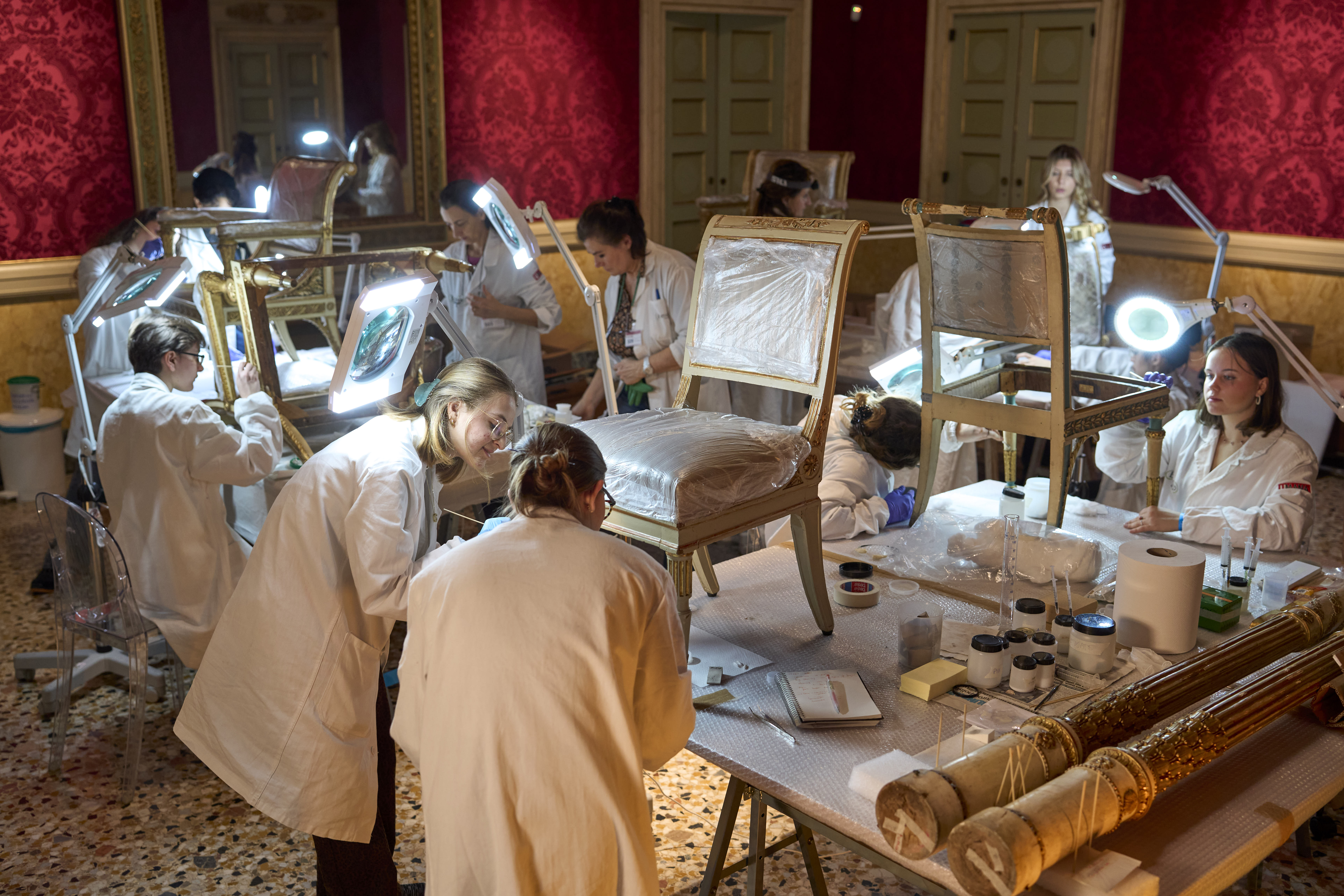
Throughout these changes, the school has kept a consistent identity built on two principles. The first is the “real task” method: from the first year, students work on genuine protected artworks on loan from museums, under the supervision of the Soprintendenza, whose officials visit the laboratories and authorize the projects. The second is the weight given to laboratory practice. Across five years the school delivers roughly 7,600 hours, half of which are spent in the restoration laboratory.
The curriculum is deliberately broad. Alongside laboratory work it covers art history from antiquity to the contemporary, history and theory of restoration, and cultural heritage legislation, since a project designer must be able to navigate calls for tenders and the legal framework. Particularly a dedicated course focused on self-entrepreneurship teaches students what it means to work as an employee or open a practice, how to write project proposals for restoration tenders, and how to build cash-flow simulations and cost estimates for materials. A substantial scientific component covers chemistry, physics, biology, microbiology, computer science, and diagnostics, now indispensable given that restoration rests on the study of materials. When an object arrives, observation and art-historical study come first, followed by diagnostics to identify constituent materials, later additions, and any biological attack, and only then does the design of the intervention begin.
Challenges and Opportunities
The most immediate challenge for graduates is the one common to any degree, finding a job, though the school reports strong demand for several of its profiles. The deeper and more persistent challenge, in Beretta’s view, is staying current. Restoration is a field where diagnostics and materials change quickly, and continuous updating is essential.
A second challenge sits at the level of culture rather than technique, and it is also where Beretta locates the greatest opportunity. Restoration, and the wider value of caring for heritage, remains poorly understood in Italy, a paradox in a country surrounded by it. Many students discover the field almost by accident rather than through school guidance. Beretta frames the goal of restoration itself as a cultural message worth spreading: the aim is not to restore but to conserve as well as possible so as not to have to restore. Building public understanding of heritage as a shared common good is, for her, the precondition for everything else.
These challenges also point to where the sector’s opportunities lie: in interdisciplinary, project-led training that produces restorers able to convene expertise, and in connecting the school more firmly to the innovation ecosystem around it.
Open Innovation Ecosystems
For the school, open innovation means working as a node in a wider network rather than in isolation, and it starts inside the building. The restorer, Beretta stresses, does not replace the art historian, the chemist, or the physicist. The restorer is the figure who knows how to talk to them, what analysis to request, and how to translate the results into a sound conservation project. The school builds this capacity deliberately. Teaching is organized around three profiles, covering stone and architectural surfaces; wood, painted panels, canvases, and contemporary art and design; and textiles, tapestry, leather, and ethno-anthropological materials, the last of these rare in northern Italy. Beretta brings in objects that force the profiles to collaborate, such as wooden stools with textile seats, or an oil painting on alabaster, so students learn early that the work is interdisciplinary not only across the sciences and humanities but across restoration specialisms too.
The school’s external network reflects the same logic. Because ministerial rules require it to work largely on museum-owned assets, with a smaller share of private works, its core partners are museums, foundations, and a few private collectors alongside universities such as the Università Statale di Milano for scientific analysis. Located in Milan’s MIND (Milano Innovation District) next to the Galeazzi hospital, the school has drawn on that proximity more than once: the hospital performed CT scans on thesis artworks, and during the 2025 MIND Innovation Week the robotics firm Oversonic, brought the cognitive humanoid robot RoBee into the laboratories, where it examined a capital, identified the black crust typical of weathered stone, and fielded students’ questions on cleaning methods. As Beretta stresses, such tools support diagnostics but do not replace the restorer: the intelligence of the hand and the trained eye, built through experience, remain what distinguishes the profession. MIND is a growing ecosystem in which the actors are still discovering one another. The value generated across these relationships is at once technical, educational, and cultural.
The network also extends internationally. The school runs curricular placements with restoration firms and laboratories, and holds agreements with Italian cultural institutes abroad, some embassies, and foreign institutions, which let students train overseas. Early-stage exchange projects are taking shape with universities and training centers in the Middle East, where restoration practices differ from the Italian approach. Increasingly, the school acts as a bridge between graduates and the world of work.
Measurable Outcomes
The clearest indicators of the school’s effect are the employability of its graduates and the way real projects flow through it. Several profiles place quickly. Profile one, focused on stone and monumental buildings, often finds work on site before the fifth year is finished, while the textile profile is in growing demand thanks to the archives of major fashion houses. Within roughly two years, graduates are generally working, usually starting with smaller projects.
Concrete projects make the difference. This year Valore Italia carried out the conservation and restoration of part of the Treasure of San Gennaro in Naples, sending a recent graduate, supported by a tutor from the school, to work on site for two months. Two years earlier, a newly qualified student was sent to the Italian cultural institute in Paris under the same supervised arrangement. The fifth-year structure reinforces this outcome orientation: each student restores a single artwork from start to finish and defends two theses, the first qualifying for the profession and the second, art-historical or scientific, conferring the master’s degree.
By training restorers who can read an object, plan an intervention, and convene the right expertise around it, the school turns a traditional craft into a strategic, interdisciplinary practice. Its strongest message to policymakers is also its simplest: invest in the culture of restoration, understood as respect for and conservation of a shared heritage, and support for young restorers, through access to funding and a review of entry requirements for schools and academies, will follow. As Beretta argues, technical capacity and policy support move together, but both rest on a public understanding of heritage as a common good.
For more information on Scuola di Restauro di Botticino, see here.