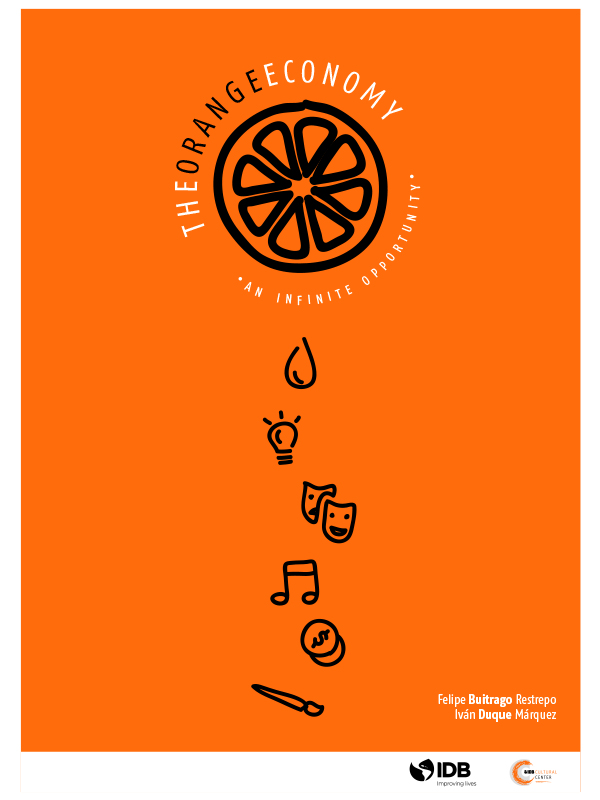
The Orange Economy: An Infinite Opportunity
This book demonstrates that creativity, culture, and intellectual property form a powerful economic system capable of generating growth, quality employment, innovation, and social value. Although its focus is on Latin America and the Caribbean, the approach aligns closely with existing European strengths: cultural diversity, advanced infrastructure, strong institutions, and established creative clusters.
-
Author
-
Audience
-
Geographical scope
-
Resource type
Contextual commentary by Lena Holmberg (ekip)
The Orange Economy: An Infinite Opportunity demonstrates that creativity, culture, and intellectual property form a powerful economic system capable of generating growth, quality employment, innovation, and social value.
The text reframes cultural and creative activities—ranging from arts and heritage to digital content, design, and software—as productive sectors where ideas are transformed into high‑value goods and services. These activities grow faster than many traditional industries, are more resilient to economic shocks, and rely primarily on intangible assets such as skills, knowledge, and networks rather than extractive resources.
A central message is that realising this potential requires more than talent alone. Investment in education, digital and physical infrastructure, access to finance, strong intellectual property frameworks, and supportive institutions is essential. Creative ecosystems thrive when cities, clusters, entrepreneurs, public authorities, and communities collaborate, enabling experimentation, inclusion, and entrepreneurship—especially among young people.
Although this book focuses on Latin America and the Caribbean, the approach aligns closely with existing European strengths: cultural diversity, advanced infrastructure, strong institutions, and established creative clusters. By embedding creativity into innovation, skills development, social inclusion, and the green and digital transitions, Europe can translate these ideas into sustainable economic development—where culture is not a marginal sector, but a strategic driver of competitiveness, cohesion, and long‑term resilience.