AI and Cultural and Creative Industries
 New European Bauhaus – CCIs enabling green transition
 Immersive Media
 Crafts-led Innovation
 Platformisation of the Music Industry
 Inclusivity in Video Game Industry
 Cross-Innovation with Performing Arts
 Fashion Transition: Eco-Design for Circularity
 Cultural Heritage Institutions within Open Innovation Ecosystems
 New funding models for creativity and innovation
 Spaces, infrastructures, and ecosystems for CCIs
Label4Future: Designing Circular Innovation with Creatives
Label4Future shows how creatives are the missing piece for circular innovation in the plastics sector. By embedding designers and artists into residencies, labs, and transnational collaborations, SMEs gain the modular design, material expertise, and fresh perspectives needed to transform products, processes, and business models for sustainable impact.
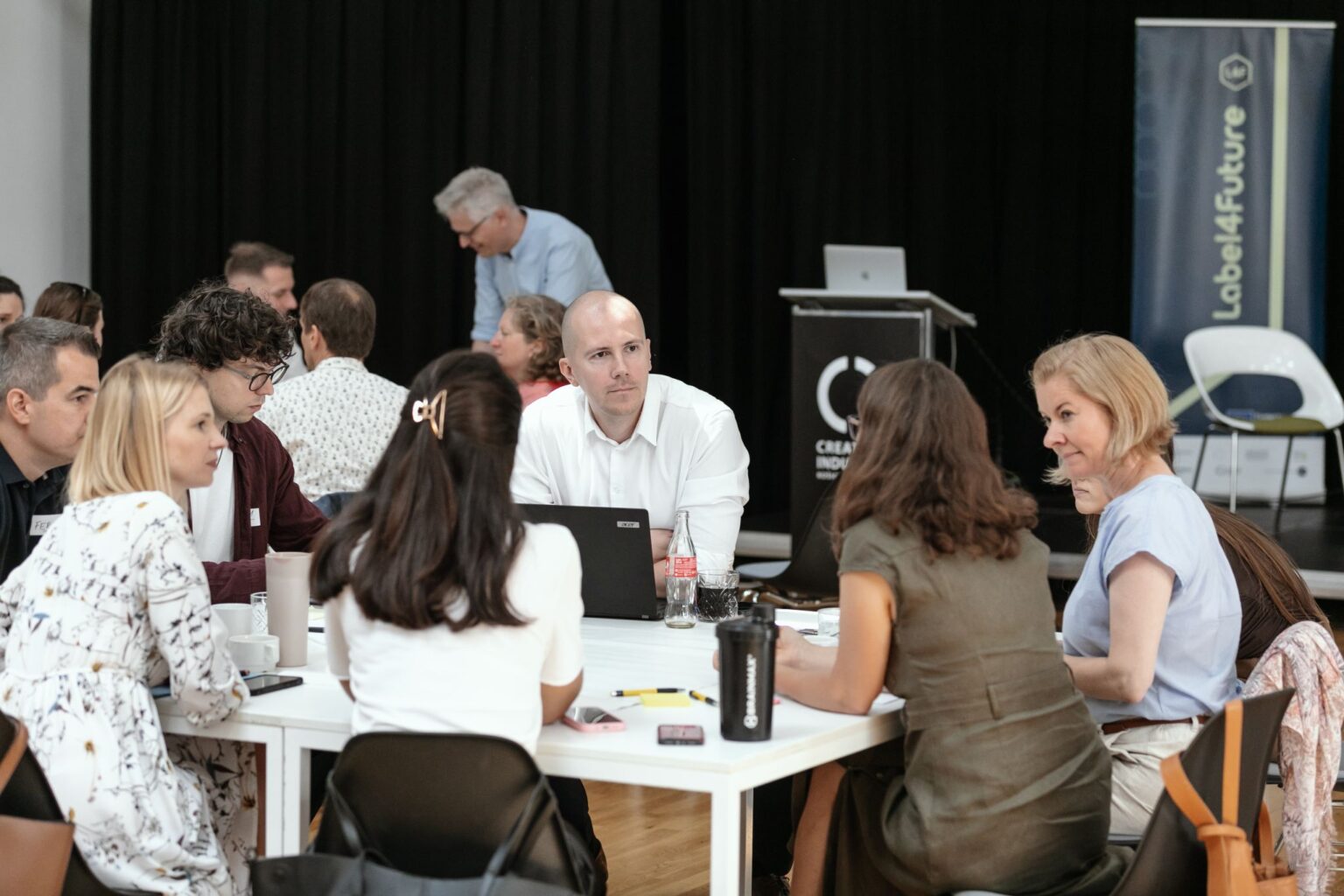 participants at a Label4Future Policy Lab workshop
-
Author
-
Audience
-
Geographical scope
-
Region
-
Resource type
Introduction
Led by ekip partner Creative Industry Košice (CIKE), Label4Future is a European initiative that helps businesses adopt circular economy practices across Slovakia, Slovenia, Czech Republic, Austria, and Romania. Focusing on the plastics industry and related fields, the project brings together new media artists, designers, and small and medium-sized enterprises (SMEs) to develop practical products and business ideas that reduce waste and rethink how value is created.
For Label4Future, creatives are not an aesthetic add-on but strategic partners in industrial transformation, embedded directly into innovation processes through open calls, labs, and residencies. Within these formats, they engage in future-scenario development, circular design experimentation, and hands-on prototyping supported by expert mentoring and transnational collaboration. By combining industrial expertise with creative methodologies, the initiative strengthens regional innovation ecosystems and translates EU sustainability goals into practical action.
Organisational Context
Label4Future emerged at a time when European policy is pushing for greener industry, circular production models, and stronger innovation in less developed regions. Initiatives such as the European Green Deal and the Circular Economy Action Plan set ambitious sustainability targets, but many small and medium-sized manufacturers lack the tools, networks, and expertise to respond effectively.
In regions where innovation ecosystems are still developing, SMEs often operate with limited access to design knowledge, cross-sector partnerships, or opportunities to experiment with new approaches. At the same time, sectors such as plastics face growing environmental expectations and regulatory change, increasing the urgency to adapt.
Label4Future responds by connecting policy ambition with practical action. By integrating creative professionals into industrial processes, the initiative helps SMEs test new ideas, rethink materials and value chains, and build the confidence and capacity needed to transition toward more sustainable models. At the same time, through facilitated Policy Labs with owners and stakeholders of smart specialization strategies across partners’ regions, Label4Future explores, initiates and suggests concrete policy actions for the strategic support of innovation through cross-regional and cross-sectoral cooperation.
These organisational and policy challenges set the stage for the specific barriers that SMEs face in adopting circular practices, which Label4Future addresses through collaborative approaches.
Challenges and Opportunities
Many startups in the plastics and polymer sector face limited innovation capacity due to high initial costs for research, development, and advanced material production. These challenges are particularly pronounced in less developed regions (below 75% of the EU’s average GDP), where SMEs often have limited access to design expertise, cross-sector partnerships, and experimentation infrastructure.
Transitioning to circular business models involves significant logistical complexity, particularly when establishing take-back systems and reverse logistics from scratch. This burden is often felt most acutely by new entrants who lack established distribution networks and the critical mass of customers required for circular systems to be economically viable.
At the same time, well-established companies may struggle with innovation resistance or remain within a comfort zone created by long-standing, efficient linear processes that are difficult to disrupt. In addition, the volatility of secondary raw material prices and a lack of public collection infrastructure continue to pose risks to the long-term stability of emerging circular models.
These structural barriers make it difficult for many SMEs to experiment with circular models independently and highlight the need for new forms of collaboration that can bridge gaps in expertise, resources, and experimentation capacity.
To overcome these challenges, Label4Future leverages open innovation ecosystems that connect SMEs with creative professionals and transnational partners, facilitating knowledge exchange between less developed regions and more advanced innovation ecosystems.
Open Innovation Ecosystems
Open innovation in this context refers to structured collaboration across sectors, disciplines, and regions to co-create solutions. SMEs do not innovate in isolation. Instead, they engage designers, artists, intermediaries, and transnational partners in shared experimentation.
By fostering a collaborative ecosystem, programs like Label4Future help stakeholders bridge the gap between technical design and business implementation. Artistic residencies introduce specialised expertise in modular product design, material experimentation, and new approaches to product life-extension. These collaborations strengthen a company’s internal innovation capacity while ensuring that circular concepts remain commercially and technologically viable. In practice, this allows startups to access design expertise that would otherwise be difficult to obtain, while established firms benefit from fresh perspectives that challenge existing production routines.
Example projects
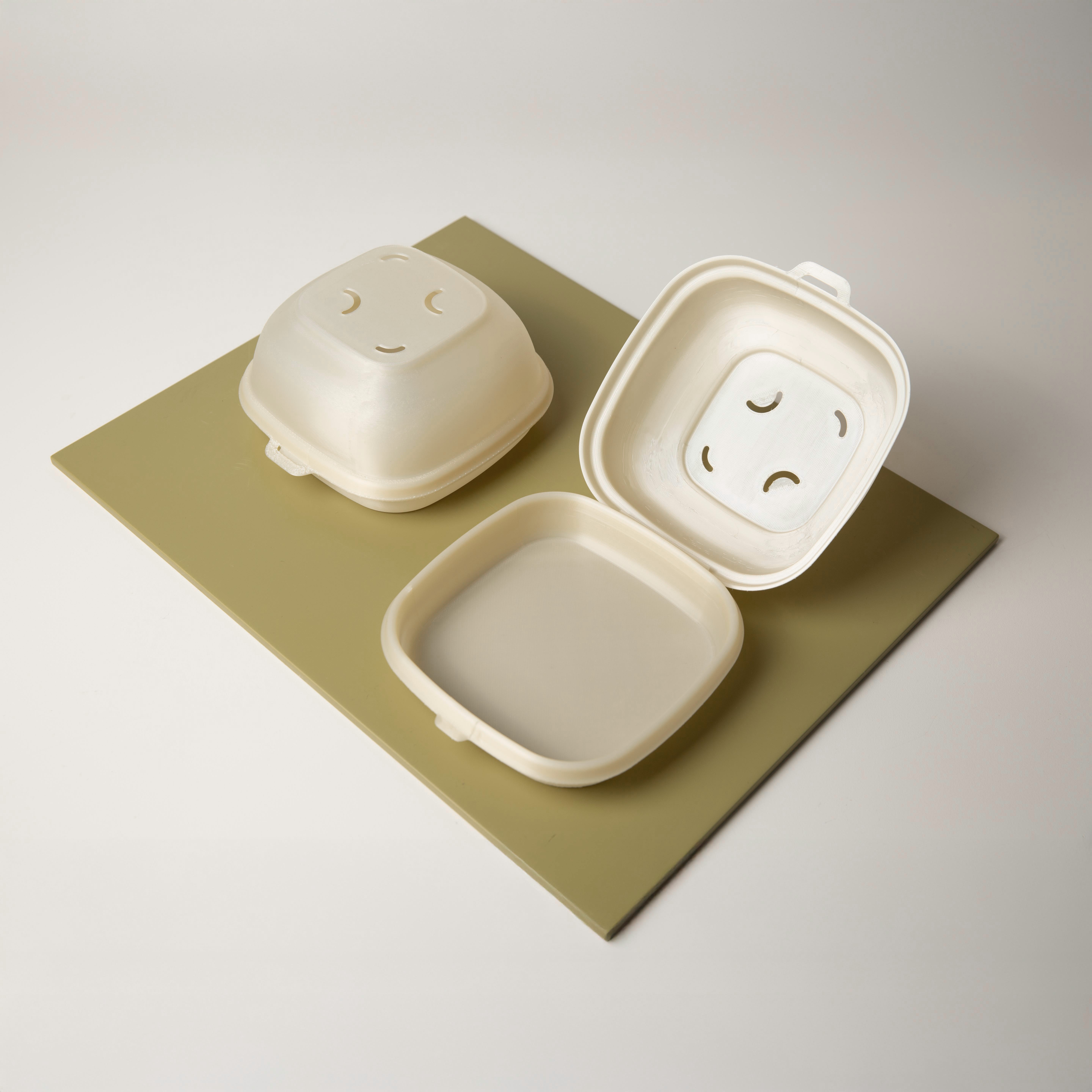
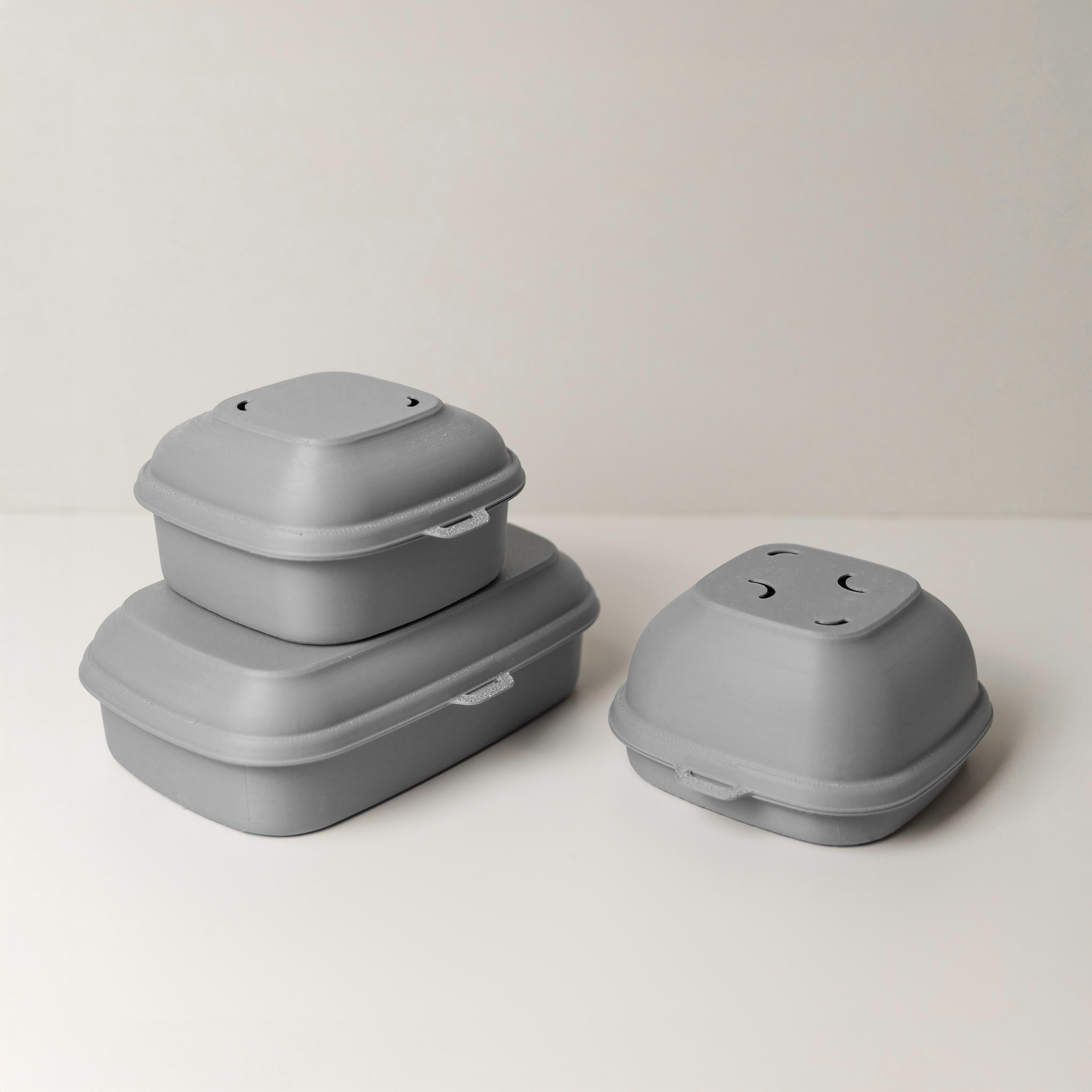
The ReEarth GastroPack project paired the Slovakian SME Anna s.r.o. with artists Carolin Liebl, Nikolas Schmid-Pfähler, and Javier Masa (NMASA Design) to develop compostable food packaging. This partnership transformed a conceptual idea into high-quality, dishwasher-safe prototypes that resemble fine tableware, shifting user perception from disposable waste to reusable design objects.
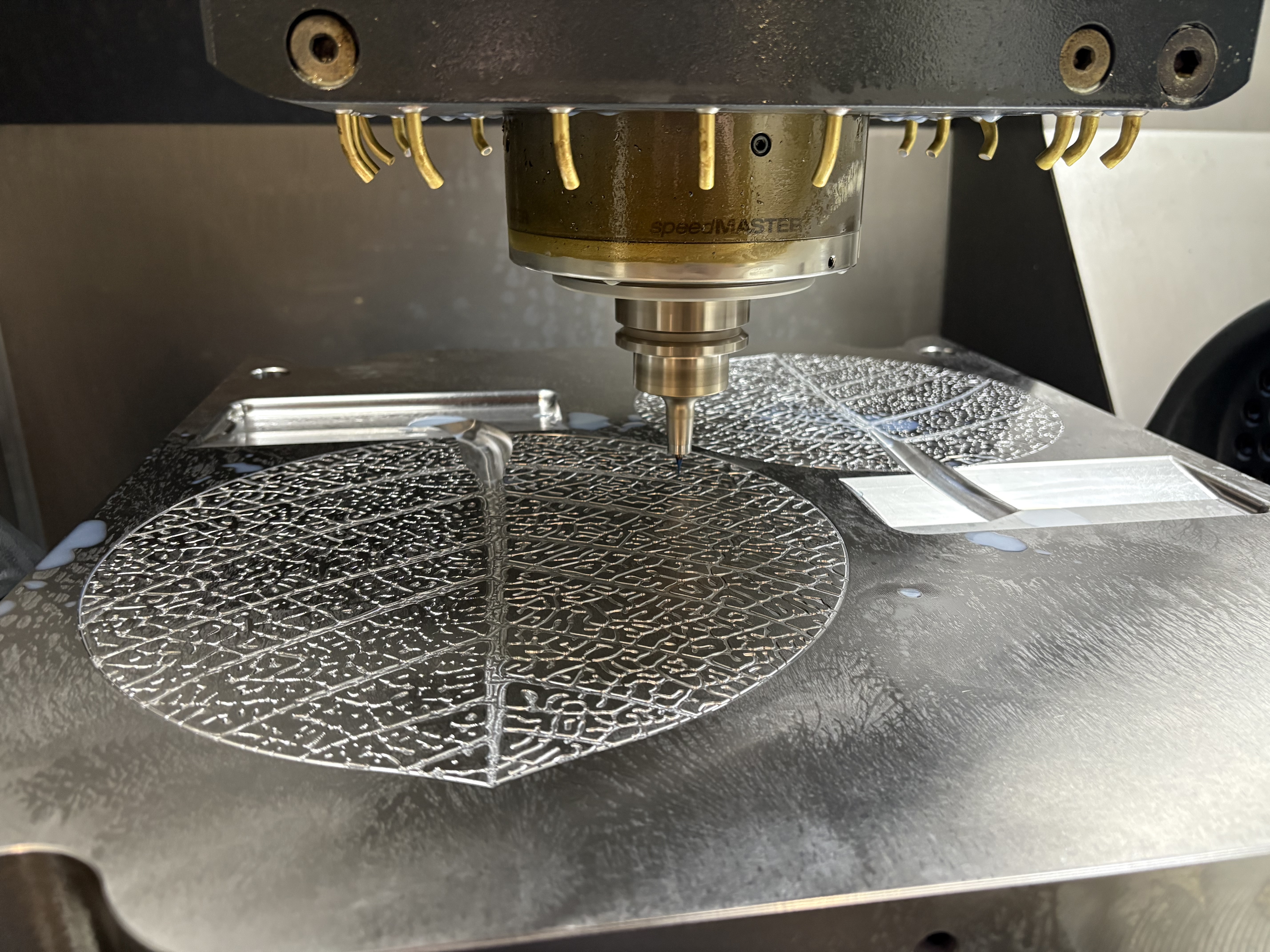
Similarly, the Heat Leaf project involved artist David Rickard and the Slovenian firm Gumarstvo Šrajner to create a multifunctional silicone camping utensil. Rickard’s lateral thinking helped develop a compact lid, trivet, and baking mat while the team successfully tested in-house recycling by incorporating shredded silicone waste into new products, solving a common industry challenge.
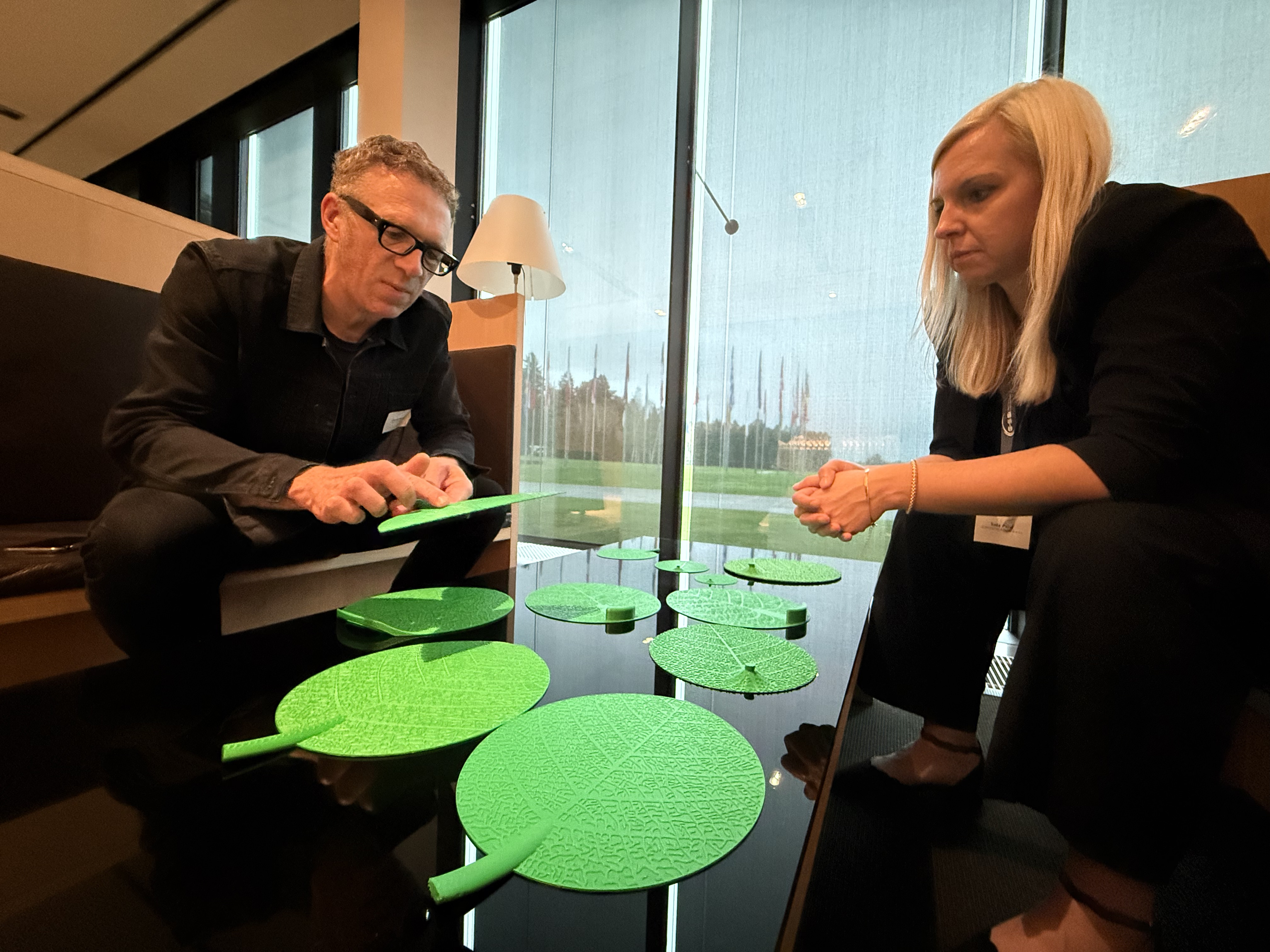
In Romania, SME Eco Blue collaborated with artist Govert Flint to redesign the ZEN office chair into a modular, circular seating system. Flint’s exploratory approach led to the creation of a 3D-printed gas-spring removal add-on, a practical innovation that enables manual disassembly and significantly improves product repairability and recyclability. These collaborations were essential in establishing a roadmap for SMEs to transition from linear to circular business models, allowing technical teams to rethink functional commodities as objects of emotion and sustainability.
What distinguishes this approach is the role of creatives as catalysts: questioning existing models, introducing new perspectives, and enabling industries to imagine alternative futures. Together, these actors generate economic value (new products and business models), environmental value (circular solutions and reduced waste), and ecosystem value (stronger cross-sector and cross-regional collaboration).
Measurable Outcomes
Several artistic residencies illustrate how collaborations with creatives translate into concrete outcomes. Designer Anka Letycja Walicka helped SME Diawin Footwear develop replaceable components like soles and cushioning zones to extend product life. While Govert Flint introduced modular strategies for dismantling and reassembling office chairs for EcoBlue, while working with production teams to ensure the components could be integrated into existing factory lines.
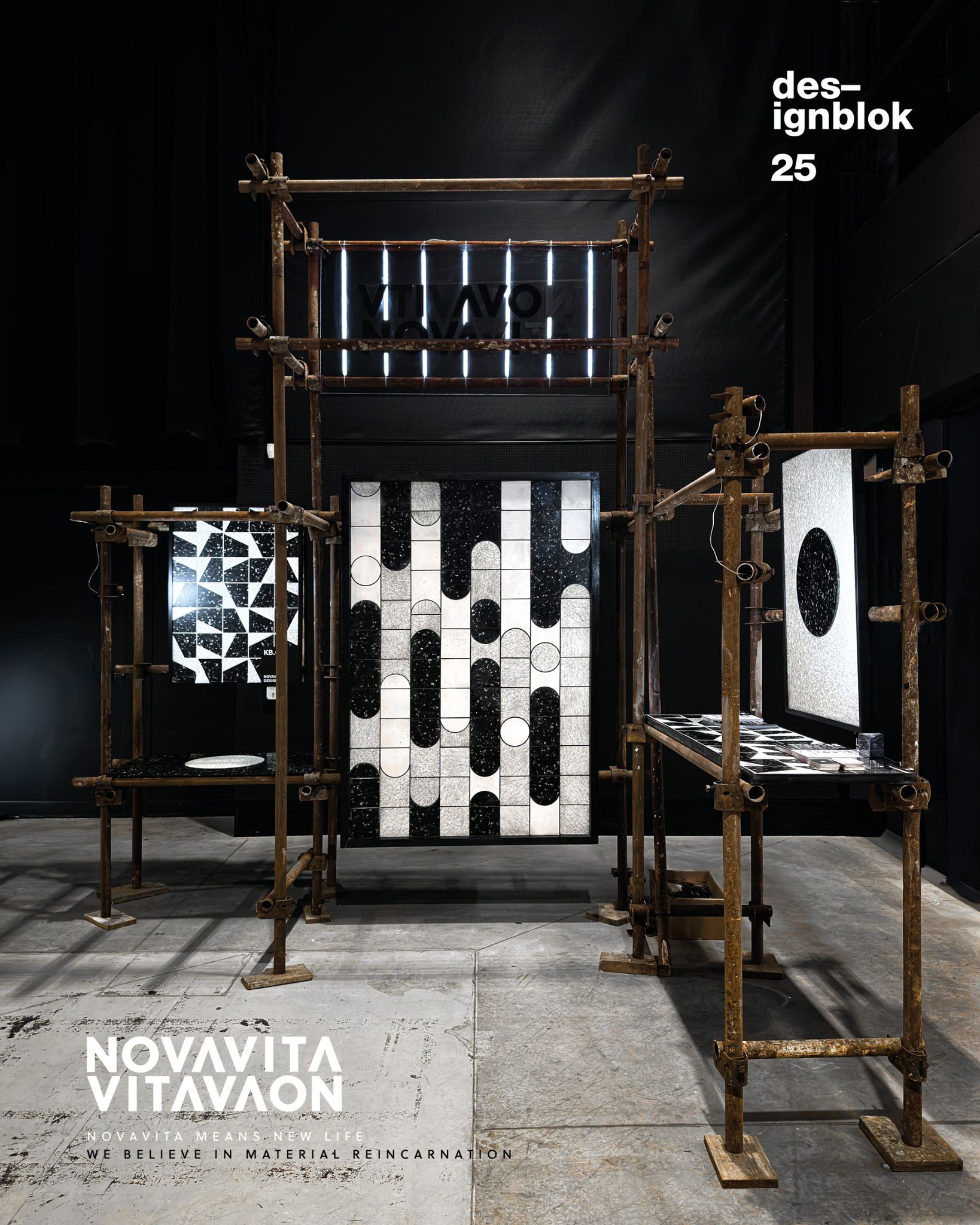
At Gumarstvo Šrajner, David Rickard trained staff in principles of material recovery and explored concepts for rubber components that did not require major infrastructure changes. Staff at Diawin Footwear were likewise trained in modular repair techniques, helping to embed these practices internally. In another case, JYC Recycling worked with NovaVita to identify and remove efficiency bottlenecks, enabling the company to scale production while maintaining high product quality.
Residencies can also contribute a more research-oriented dimension to product development. The studio Radiate systematically documented the biodegradability of bioplastic materials for Anna s.r.o., generating practical insights into decomposition behaviour and environmental impact that can inform future design decisions. In addition to technical innovation, designers such as NMASA help companies strengthen their sustainability-oriented brand identity and explore cross-sector collaborations that diversify product portfolios.
By integrating creatives into industrial contexts, Label4Future unlocks new ways of thinking, prototyping, and problem-framing. Regulatory pressure becomes a driver for experimentation, and underutilised creative talent becomes a catalyst for systemic change.
For more information on Label4Future see here.