AI and Cultural and Creative Industries
 New European Bauhaus – CCIs enabling green transition
 Immersive Media
 Crafts-led Innovation
 Platformisation of the Music Industry
 Inclusivity in Video Game Industry
 Cross-Innovation with Performing Arts
 Fashion Transition: Eco-Design for Circularity
 Cultural Heritage Institutions within Open Innovation Ecosystems
 New funding models for creativity and innovation
 Spaces, infrastructures, and ecosystems for CCIs
 Reimagining Deep-Tech
 Digital Commons
Building Bridges: Found.ation as a Boutique Consulting Firm in Athens
In Athens, Found.ation has evolved from one of Southeastern Europe's largest incubators into a boutique consulting firm that acts as a bridge between startups and large corporations. Its case shows how a shift in role and method can open a corporate culture to innovation, and how creative and interdisciplinary teams sit at the heart of that work.
-
Author
- Silvia D'Ambrosio, ekip (2026)
-
Audience
-
Geographical scope
-
Region
-
Resource type
Introduction
Found.ation is based in central Athens and was created in 2011 as one of the largest incubators in Southeastern Europe, combined with a coworking space. In its first years, it hosted mainly startups and offered mentoring from its founders, who were themselves experienced entrepreneurs. Around 2017, the founders came to a different reading of the ecosystem: what Greece needed was not more people advising young entrepreneurs, but a way to open the ecosystem of large corporations to the world of startups and innovation. From that shift, Found.ation gradually turned into what Celia Gkavanozi, Innovation Project Manager at the organization, describes as a boutique consulting firm.
Found.ation reframes what an innovation hub can be: not primarily a place that produces new startups, but an intermediary that reshapes how large organizations relate to innovation. Moreover, it does so by means of a distinctive, interdisciplinary way of thinking. Celia’s own path (from a psychology degree in Greece, to a master’s in neuroscience in the Netherlands, to five years of research on empathy and teaching at the University of Amsterdam in the Master of Brain and Cognitive Sciences, and then to Found.ation via its NGO arm Social Innov, initially working on the Microsoft-funded Tech Talent School for Educators) illustrates the profile the organization values: people able to move across science, technology, education, and business, and to translate between them.
Organizational Context
Found.ation operates in a Greek context that Celia describes with unusual candor. Many companies, she notes, present themselves as forward-looking, but at their core still work with what she calls an old-school mentality: strong hierarchies, rigid processes, and a limited degree of digital transformation. She gives the shipping sector as an example: one of the strongest sectors in the Greek economy, technologically advanced at hardware level, but slow to open to startups and new ways of working. The result is that innovation, in her words, is not a necessity in Greece. Most managers and employees understand its importance in principle, but under daily pressures it tends to be deprioritized.
This diagnosis explains why Found.ation’s 2017 shift was so consequential. Instead of continuing to focus on the supply side of the ecosystem, by supporting new startups, the organization repositioned itself on the demand side, working with large corporations from retail, pharmaceuticals, insurance, and all of the country’s main banks. Its role is to help these organizations engage with startups, with new technologies, and with the vocabularies and methods of the digital era. The European dimension of Found.ation’s work, through participation in European projects and consortia on new technologies and technical literacy, feeds back into this core: it keeps the organization close to emerging trends and helps translate them for the Greek business landscape.

Challenges and Opportunities
The central challenge Found.ation faces has to do with time. Innovation, in Celia’s diagnosis, is caught between two contradictory rhythms: the accelerating pace of the digital era, in which everything is expected to happen faster and faster, and the slow, incremental time that meaningful organizational change actually requires. Large organizations often approach the firm with an urgent request, only for the work to get stuck in internal bureaucracy, from NDAs to internal alignment on what value a startup collaboration should bring. At the other end of the process, startups may be asked to be ready in a week, the moment a corporate window finally opens. Holding these mismatched clocks together is a big part of Celia’s job, keeping both parties at ease, staying available on the spot, and moving the process forward one step at a time.
A second challenge sits at the level of ecosystem structure. The most transformative collaborations, Celia argues, would be those between large corporations and scale-ups, because they can produce real change. But the harder case is the one where a corporation is asked to work with a smaller startup: the corporation wants proven value, and the startup cannot prove it without corporate clients. This paradox, she notes, is one of the main reasons ecosystem-level intermediaries are needed at all. A pilot with a large corporation is a major milestone for a startup.
A third tension has to do with the C-level ceiling of innovation. Found.ation can, and does, train employees to think like startupers, run internal innovation competitions, and teach design thinking and service-design methodologies. But whether the ideas produced by these processes are actually adopted depends on the C-level management of the client, which is beyond the firm’s reach. This is one of the recurring reasons why good ideas stall even in well-run internal programs.
At the same time, the current moment is opening real opportunities. Generative AI, in particular, has changed the picture. Where Found.ation used to work almost exclusively with large corporations, it now sees growing demand from small and medium enterprises for AI trainings. AI, Celia observes, can be especially useful for SMEs precisely because it gives them access to things (automations, analyses, syntheses) that previously required specialist skills and large teams. Innovation, she says, is starting to become part of everyday life, and therefore relevant to everyone.
Open Innovation Ecosystems
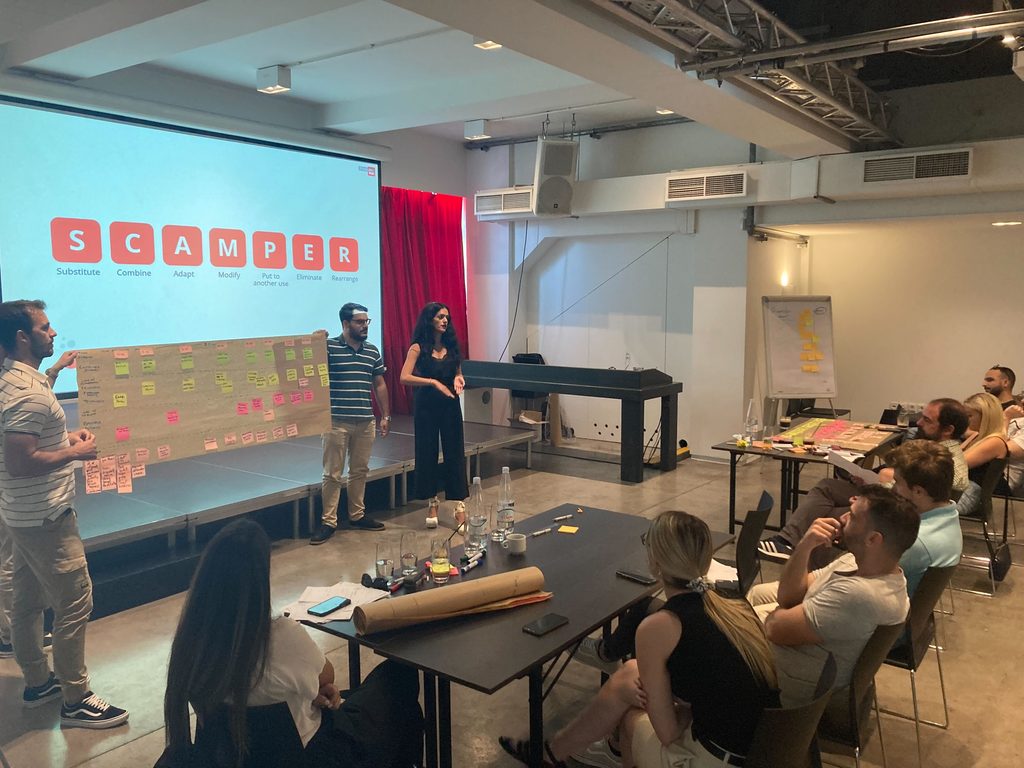
For Found.ation, open innovation is organized around four broad areas that overlap in practice. The first is a European projects pillar, which engages the organization in European consortia on new technologies and technical literacy, and which acts as a lookout on emerging trends. The second, third, and fourth areas sit under what Found.ation calls Business Transformation Services: content, innovation solutions, and business training.
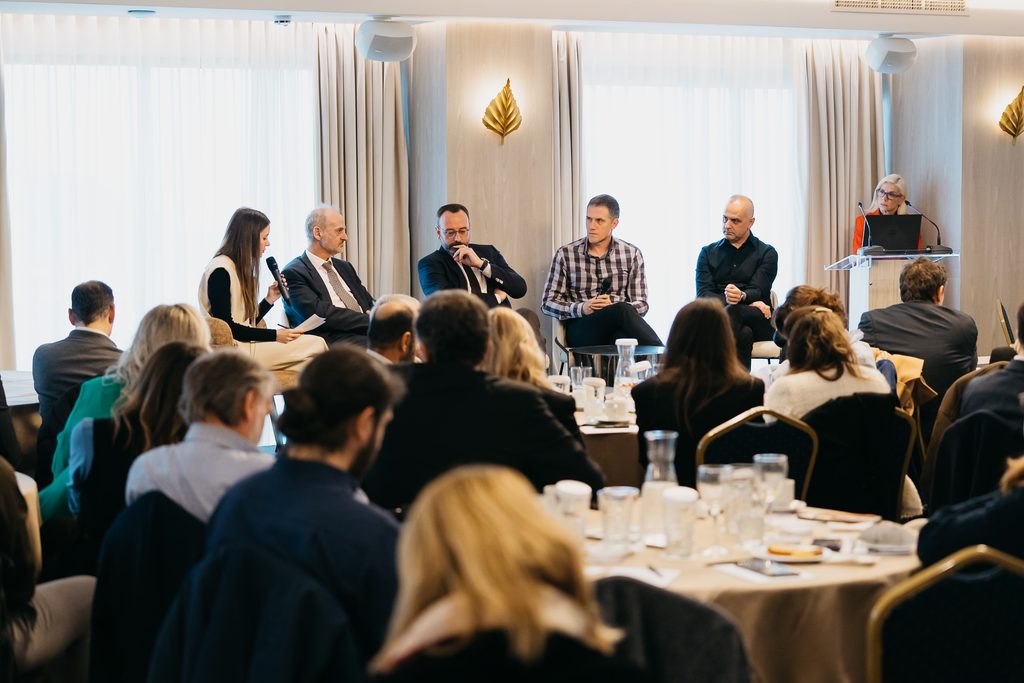
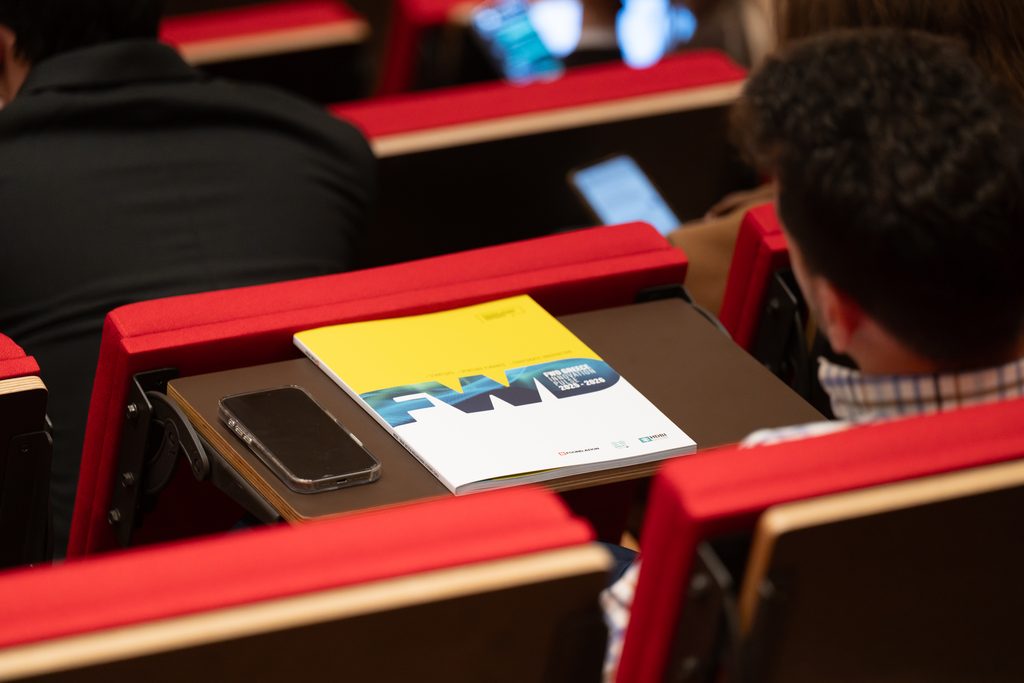
Content is understood as thought leadership rather than communications. Since 2017, Found.ation has co-published two annual reports on the Greek startup ecosystem and on digital transformation in Greece, together with EIT Digital and the Hellenic Development Bank of Greece. In Celia’s account, there is no other comparable, well-maintained record of these two dimensions of the Greek ecosystem, and the reports are one of the things that has put Found.ation on the map. The same approach is offered to individual companies, which are helped to map their own sector from an innovation and digital-era perspective, and to events, designed less as networking occasions and more as opportunities to bring startupers into rooms with corporates, where many collaborations begin.
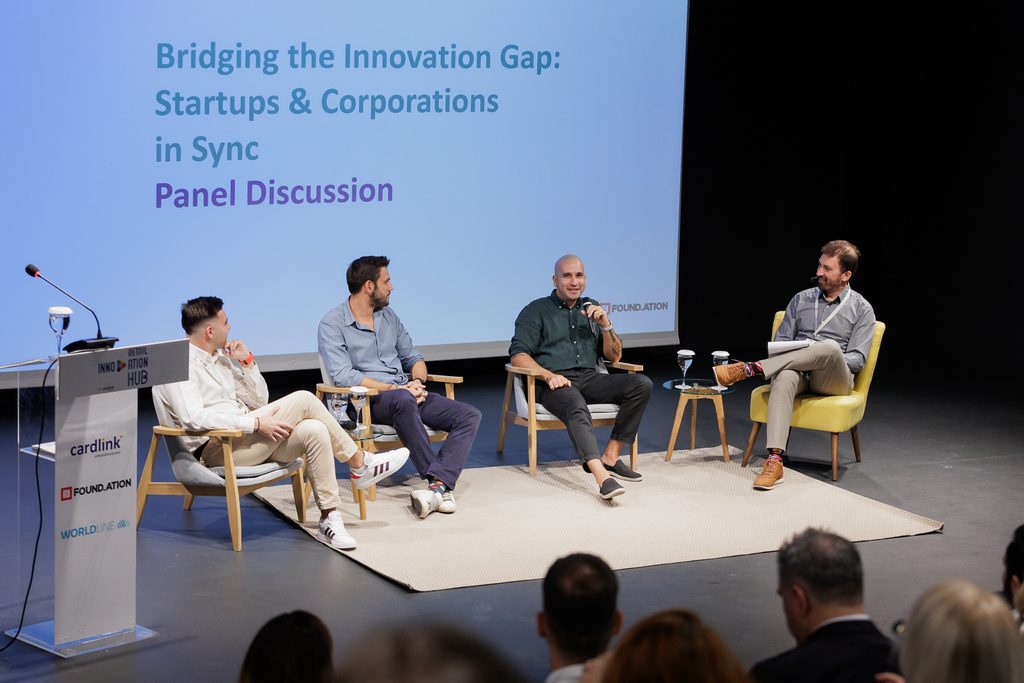
Innovation solutions and business training complete the offer. On the innovation side, Found.ation runs scouting for corporations, organizes accelerators branded and populated with the client’s experts while providing the innovation methodology, and runs a Business Factory service that directly facilitates meetings between selected startups and corporate stakeholders. Whether these encounters lead to a pilot, a proof of concept, or an investment is entirely the corporation’s decision. On the training side, the firm delivers short programs on design thinking, service design, and blueprinting; internal innovation competitions that treat employees as startupers; and, increasingly, sessions on generative AI, from ChatGPT to Claude, aimed less at technical proficiency and more at establishing a shared vocabulary so that colleagues across an organization can talk about the digital era on the same terms.
The organization’s own team is a distinctive feature of the model. It brings together engineers, developers, marketing professionals, journalists, and businesspeople, and its strongest asset, in Celia’s view, is its ability to take complex knowledge and make it simple without making it superficial. Alongside the corporate side, Found.ation also runs Social Innov, its NGO arm, which delivers programs such as the Microsoft-funded Tech Talent School for Educators, training teachers from primary school to high school in the technical and psychological skills of the digital era.
Measurable Outcomes
Found.ation works with a mix of tangible and less tangible indicators. On the tangible side, the two annual reports published since 2017 on the Greek startup ecosystem and on digital transformation, co-produced with EIT Digital and the Hellenic Development Bank of Greece, are unrivaled in the Greek landscape and, in Celia’s account, one of the things that has put Found.ation on the map. The seven-year collaboration with EIT Digital (now 28 Digital) has helped support the creation of 64 new legal entities, and the firm’s clientele spans all of Greece’s main banks, insurance, retail, and pharmaceutical companies, while its reach is expanding to SMEs through AI trainings. Other indicators are harder to count but no less telling. Found.ation was among the first players in Greece to work on AI as a topic, well before its current wave of adoption, and its biggest asset, in Celia’s account, is an interdisciplinary team able to translate complex knowledge into usable form without making it superficial. Beyond these, what Found.ation ultimately produces is often intangible and cumulative.
Her strongest message to policymakers is that current European funding concentrates on the supply side of the ecosystem, supporting individuals and small companies with ideas, while leaving unresolved the harder question of what those ideas plug into. A European stream that supported large corporations to facilitate collaborations with startups would, in her view, be transformative: it would give corporates a legitimate reason to engage and embed startups in real business relationships that outlast the funding cycle. As Celia puts it, it is not only about creating new ventures; it is also about incorporating them into the fabric of the economies they are meant to change.
For more information on Found.ation, see here.