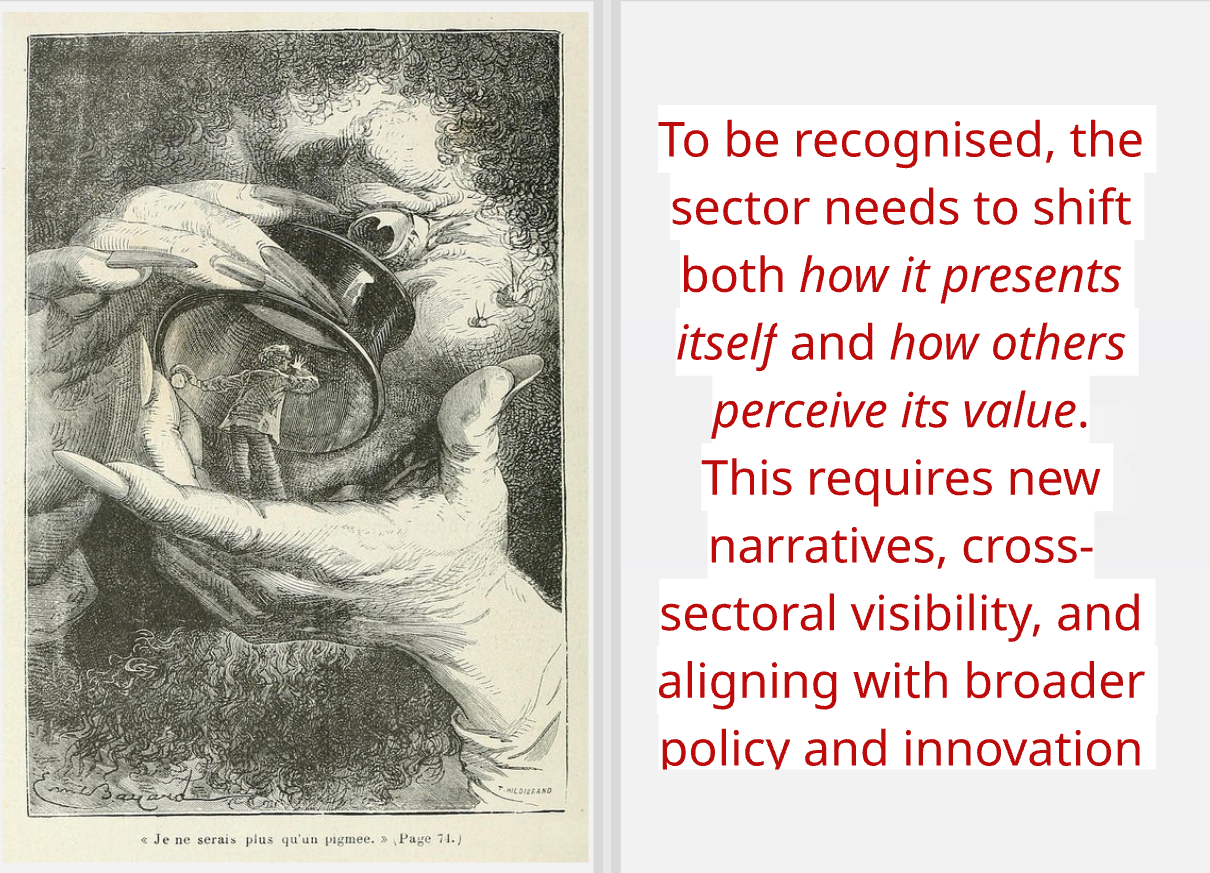
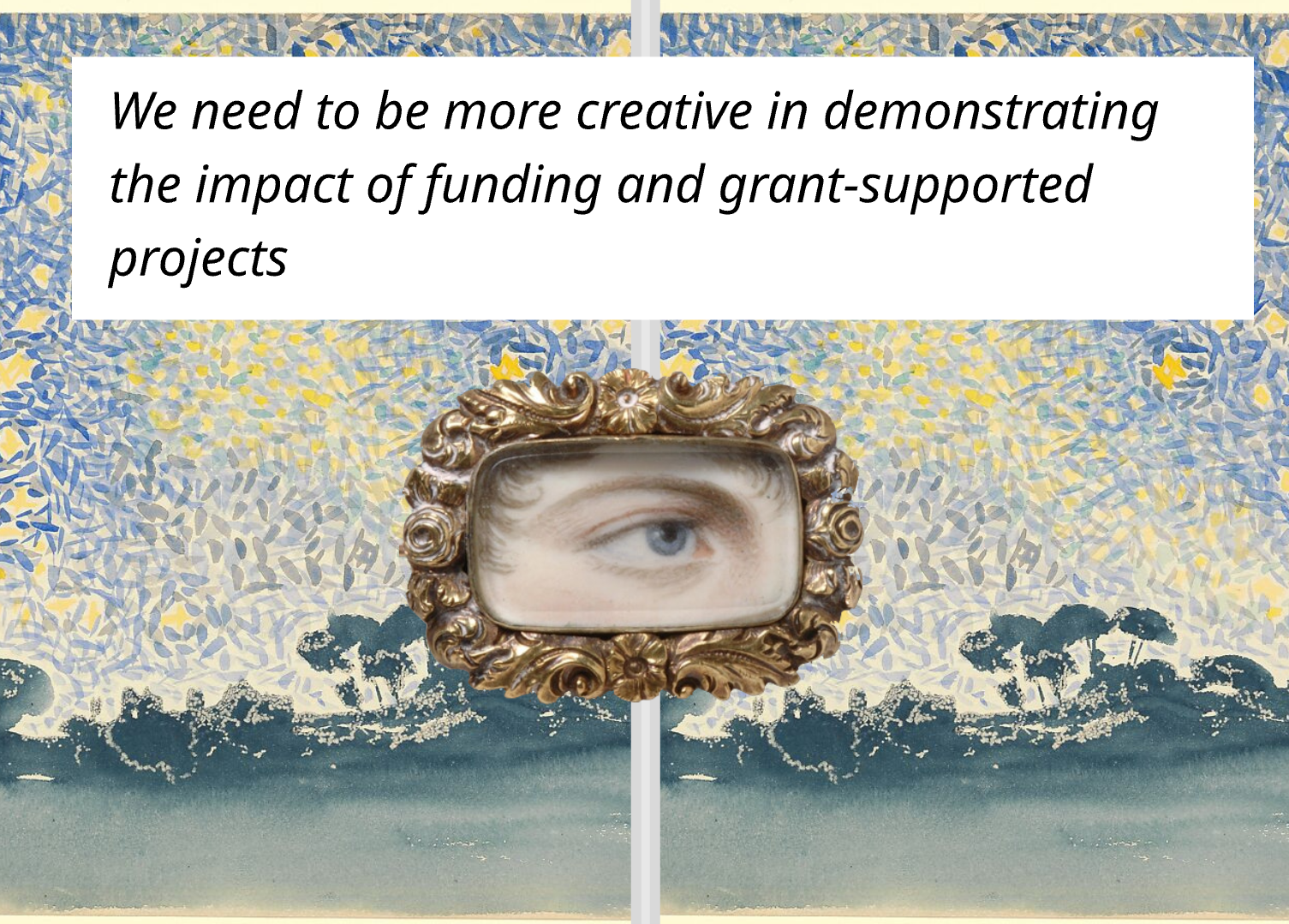
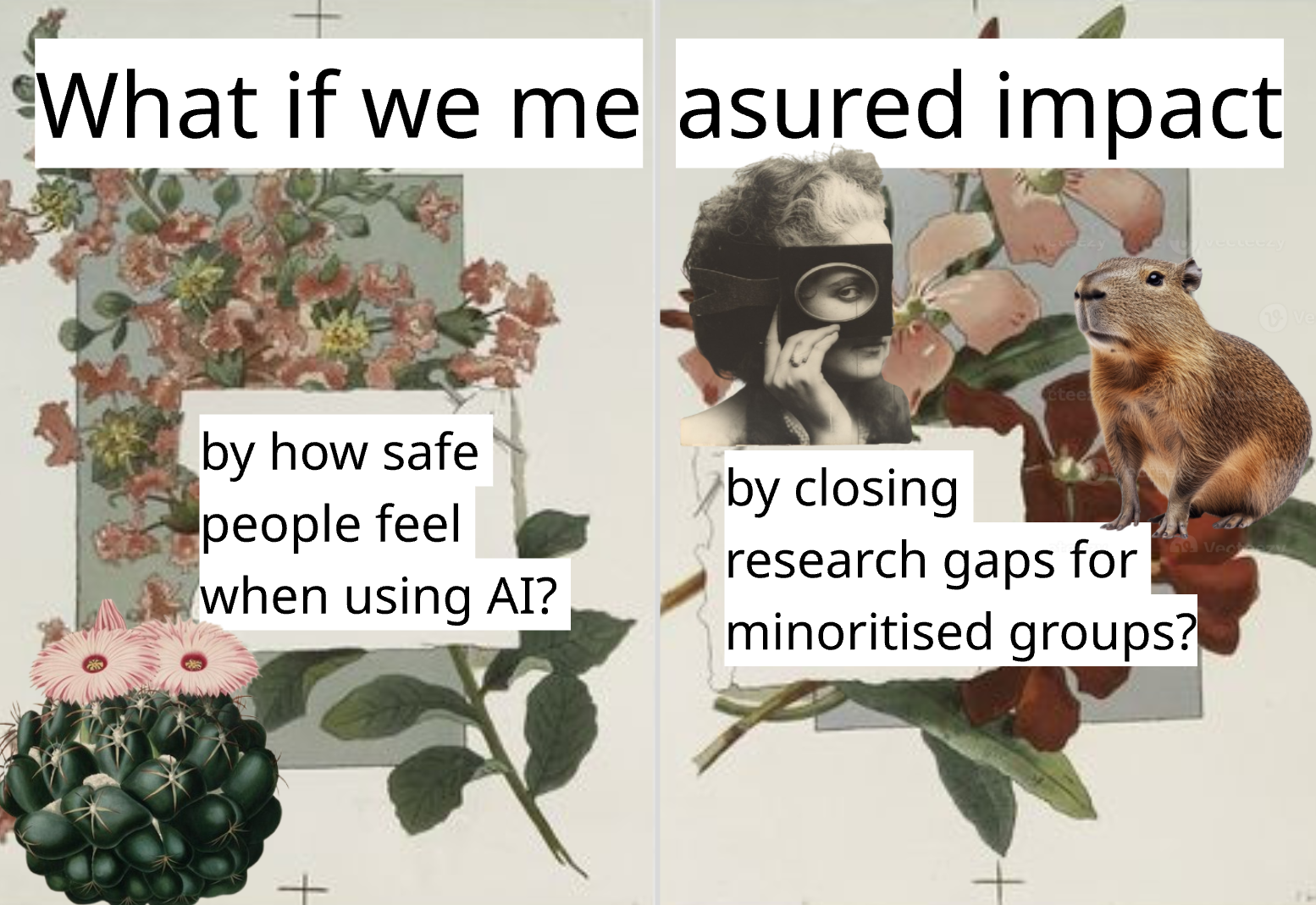
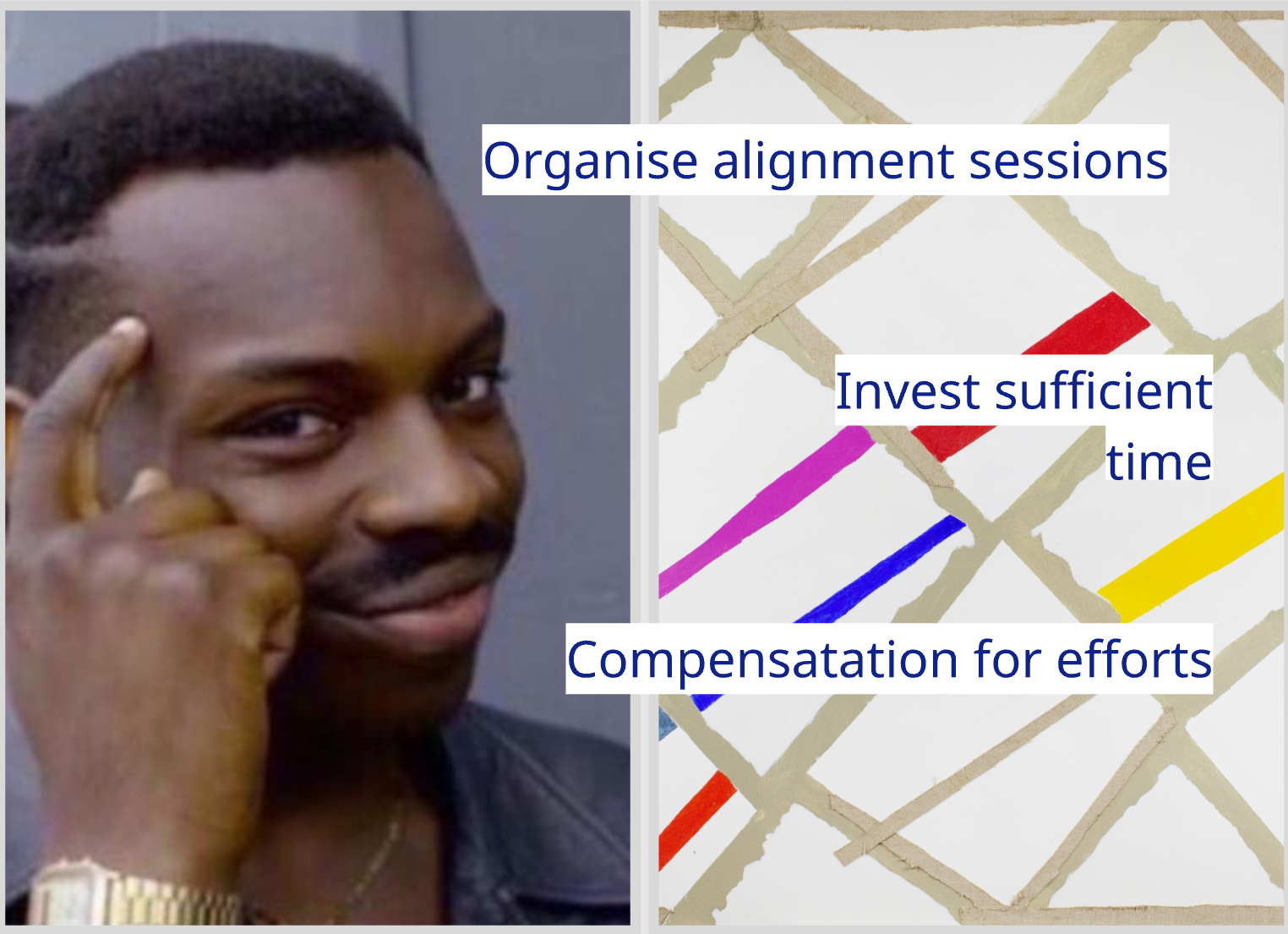
This online workshop format invites participants to collaboratively ‘hack’ innovation policy topics (such as funding and infrastructure) for the CCIs while working on visual mini-zines. Step-by-step, you will see examples from the "What’s the price tag of innovation? Hacking the future of CCIs" session.
If you feel stuck when thinking about innovation policy topics (such as funding, infrastructure, etc.) and find yourself repeating the same arguments but lack new ideas, use this zine-making workshop format with your collaborators to spark imaginative thinking.
Purpose
Developed as part of ekip’s ongoing Future Forward Hackathons programme, we have devised this online workshop format where participants collaboratively ‘hack’ innovation policy topics for the CCIs. Future Forward Hackathons are our method for translating emerging societal, technological, and environmental priorities into forward-looking opportunities for the Cultural and Creative Industries (CCIs). In keeping with the creative spirit of the project, participants work on visual zines that offer concrete provocations and actionable insights. (A zine is a small, self-published booklet that shares ideas, stories, or art; often in a personal or DIY style.)
This guide outlines how to use the assets we created to run your own Hacking Futures for CCIs workshop.
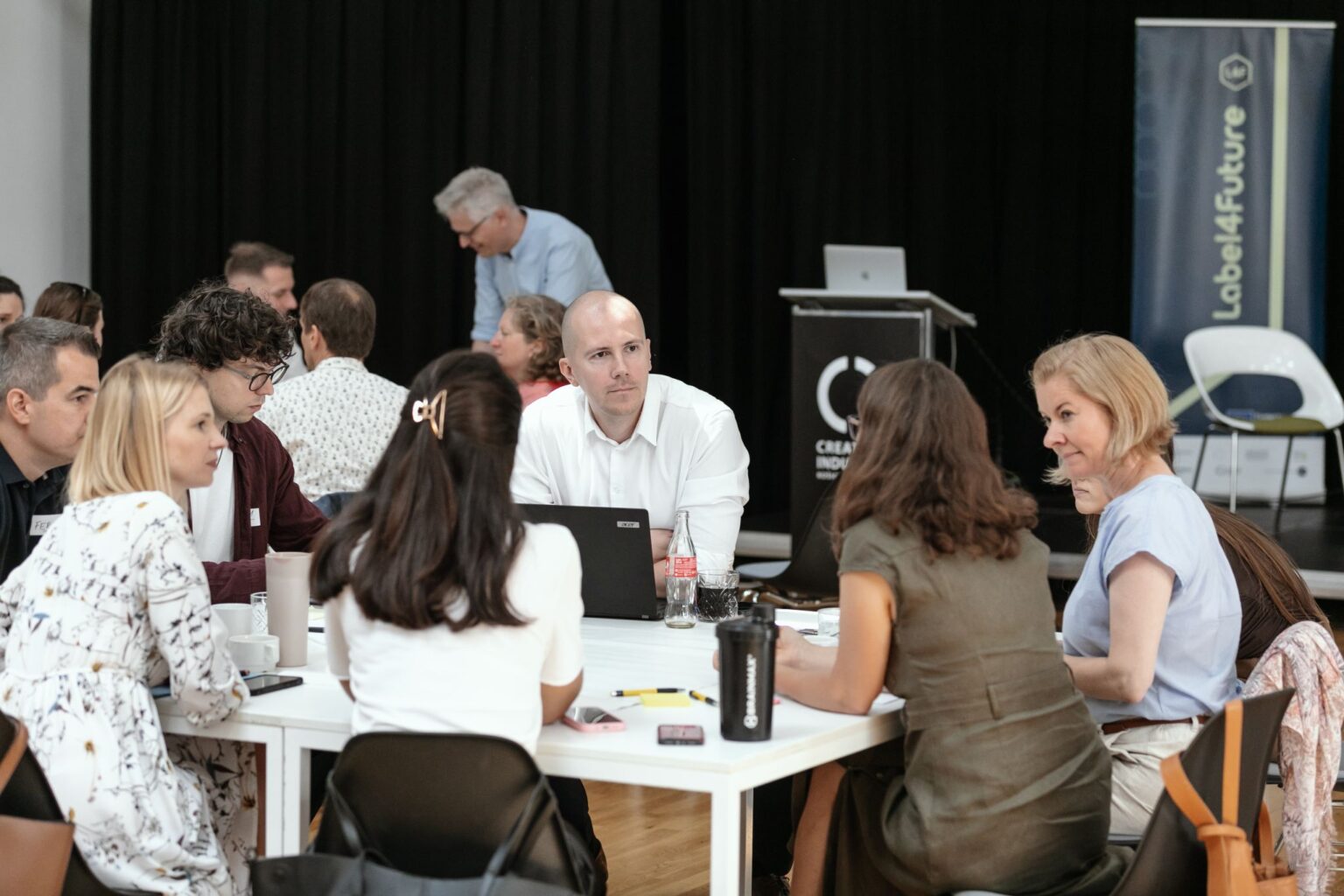
As we take you step-by-step, you will see accompanying visuals and follow-along examples from the second ekip Future Forward Hackathon What’s the price tag of innovation? Hacking the future of CCIs hosted by the Netherlands Institute for Sound & Vision across two online sessions in Summer 2025. Throughout the guide, you’ll find examples and visuals from that workshop to illustrate how the method works in practice.
This workshop is for you, if:
You’re a funder or policymaker seeking to understand CCI needs beyond traditional KPIs, timelines, and investment logic.
You work in the cultural or creative industries and feel stuck in repetitive conversations about innovation policy topics.
You’re looking for a playful, visual, collaborative method (like zine-making) to spark new ideas with colleagues or stakeholders.
What Do We Mean by “Hacking”?
In this context, hacking futures does not refer to technical hacking. Instead, it describes a creative, critical, and playful intervention into existing assumptions about how innovation and policy are shaped. By bringing together diverse perspectives, speculative scenarios, and visual storytelling, participants “hack” a topic by:
reframing how it is usually understood,
surfacing overlooked values and practices,
identifying gaps and opportunities, and
imagining alternative futures that could influence policy thinking.
Hacking is a way of breaking open repetitive conversations to make space for new narratives, metaphors, and possibilities.
Context:What’s the Price Tag of Innovation?
Does current funding for innovation match the characteristics and ambitions of the CCIs? Public funding models tend to prioritise short-term projects, market-driven KPIs, and highly ambitious results produced from relatively small investments. Private investors often work with expectations that do not align with the slower pace, community-driven nature, or smaller scale of creative businesses. Meanwhile, many cultural and creative practitioners lack the entrepreneurial skills that would help them pitch, scale, or position their innovations effectively. Can we bridge this gap between funders and CCIs to support innovation?
Although the example in this guide focuses on funding, the method can be adapted to topics such as infrastructure, support systems, collaboration, or future opportunities for CCIs.
Why zine making?
Zines as a format stem from underground communities seeking independent and more open-ended ways to publish, build vocabularies of resistance, and mobilise together. It’s certainly not the typical format for talking about policy. The focus on visual language and unrestricted narratives might feel unusual or even uncomfortable in comparison to a typical policy paper… and that’s the point! Take on this challenge to step away from the usual policy contexts that might open new ways of thinking, talking, imagining and building the future.
Before you run your own workshop
Define the scope – Clarify the theme you want participants to “hack” (e.g., funding models, support systems, future opportunities) and what’s in or out of scope.
Decide who should participate – Identify the voices you need (e.g., practitioners, funders, policymakers) and whether you want a mixed or focused group.
Plan the setup – Determine the workshop duration (typically 2–3 hours), group size, and facilitation roles; let participants know they’ll be doing light visual work.
Prepare materials – Gather any visuals or examples you’ll use during the session.
Configure your Miro board* – Make a copy of the template, adjust prompts to fit your theme, set up breakout areas, and ensure instructions are visible and easy to follow.
Brief participants – Send a short message with the purpose, schedule, and required tools (e.g. Miro access).
Plan how you’ll capture outputs – Decide how zines, screenshots, and notes will be collected and how results will be shared afterwards.
*All activities were designed using the digital whiteboard tool Miro. Activities from What’s the price tag of innovation? can be referenced via the following Miro template.
STEP 1. WELCOME & INTRODUCTION – 20 minutes Introduce the goals, topic, and approach of the workshop (e.g. why use a zine format?)
STEP 2. REFLECTION – 10 minutes Open dialogue among participants about their understanding of what the topic means to them.
STEP 3. BREAK-OUT ‘ROOMS’ – 20 minutes Explore specific dimensions of the topic through collaborative discussion and idea generation.
STEP 4. MINI-ZINE CREATION – 55 minutes Translate the ideas, provocations, and insights from the discussions into visual artefacts.
STEP 5. FINAL REFLECTION – 15 minutes Consolidate learning, share insights, and identify key takeaways from the workshop experience.
Note: For offline workshops, the framework and steps will remain the same, but facilitation set ups will differ (e.g. participants will not work in Miro, facilitators may have different tables for specific thematic areas of focus, etc.)
1
WELCOME & INTRODUCTION
Purpose: introduce the goals, topic and approach of the workshop.
This segment sets the stage for the session. Facilitators begin by outlining the workshop’s aims. They then introduce the concept of “hacking futures for CCIs,” a creative process that draws on future scenarios and cross-sector insights to reimagine policy topics, from innovation infrastructure to funding models.
Participants are invited to:
Get creative and critical
Raise new questions, provocations, and ideas
Plant seeds for future discussions and actions
Have fun
This opening segment should encourage participants to consider their role not only as practitioners or policymakers, but also as future-shapers capable of reframing existing systems. The workshop is also an opportunity to build connections across roles, sectors, and experiences. By gathering funders, practitioners, and policymakers in one creative space, the session encourages mutual learning and helps participants understand how others in the ecosystem interpret the same challenges.
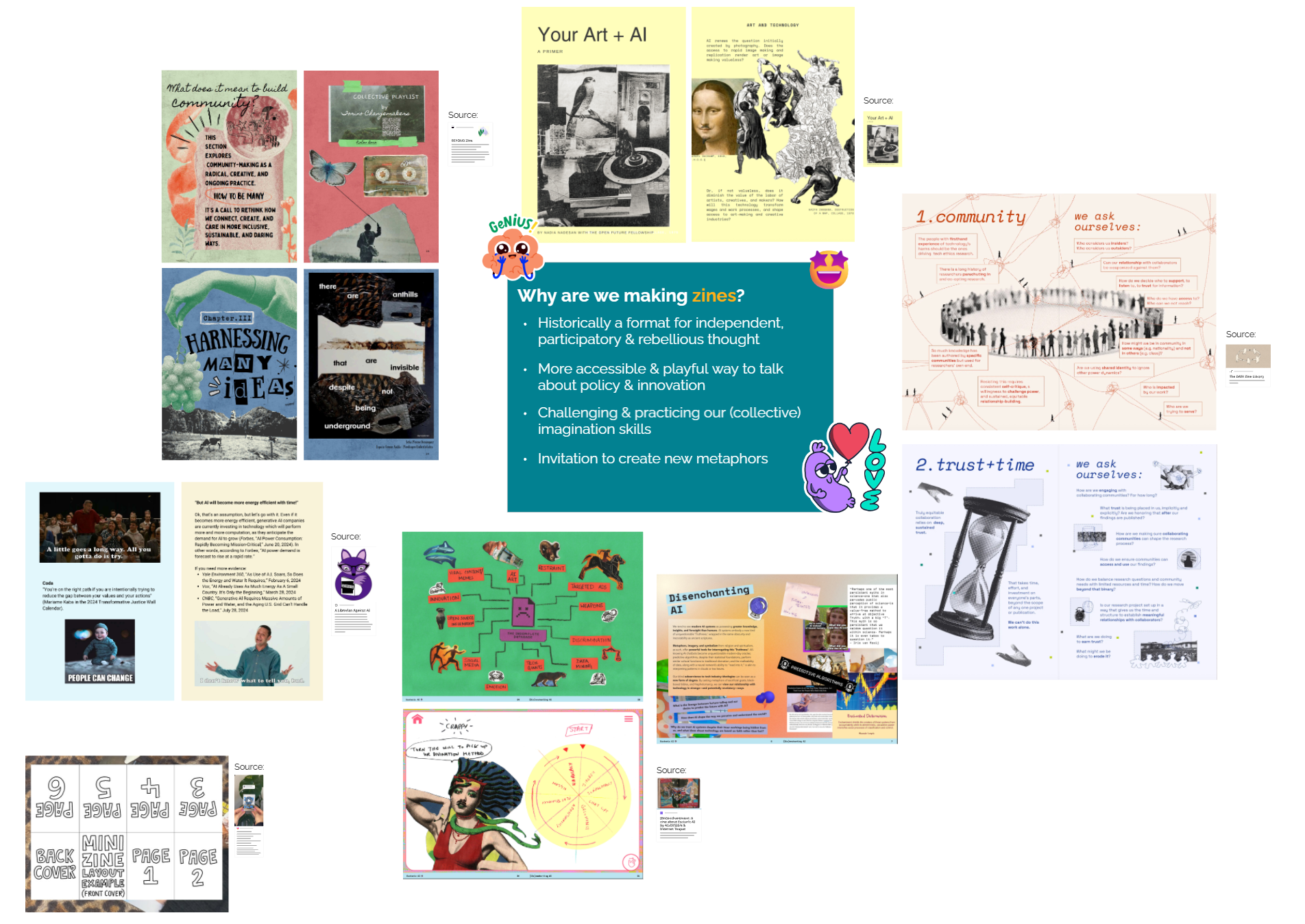
Activity reference; Why are we making zines?
02
reflection
Purpose: open dialogue among participants about their understanding of what the topic means to them.
Responses are shared briefly in plenary to build a collective sense of the room’s experiences before participants move into smaller groups for deeper exploration.
FOLLOW-ALONG EXAMPLE
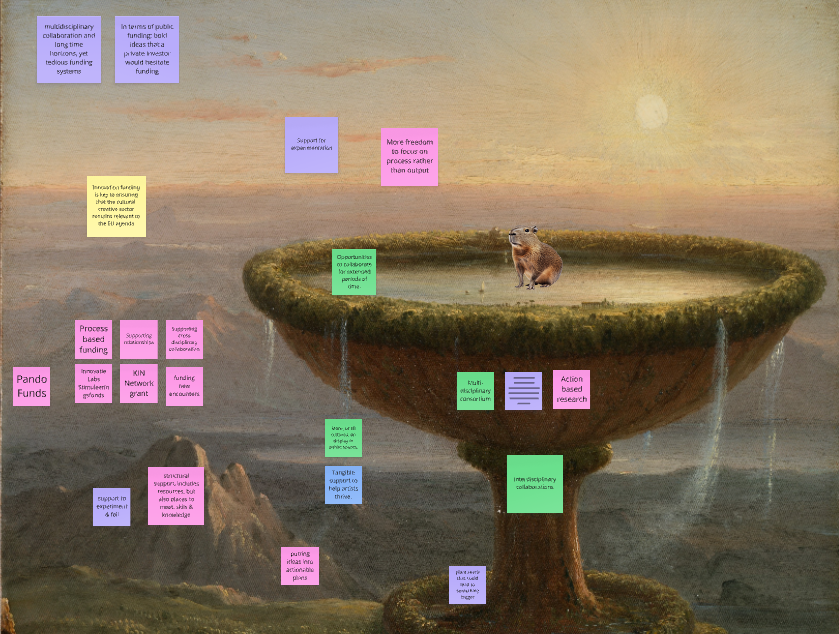
During the What’s the Price Tag of Innovation? session, the prompt was: What is innovation funding for you?
Participants described innovation funding at its best as;
Opportunities to collaborate for extended periods of time.
Tangible support to help artists thrive.
Key to ensuring that the sector remains relevant to the EU agenda
And at its worst as;
Spending nights writing proposals.
The unknown.
Squeezing the project we want to do into funding requirements.
Activity responses from 25 June 2025 of the What’s the price tag of innovation? Hacking the future of CCIs sessions
03
BREAKOUT “ROOMS”
Purpose: Explore specific dimensions of the topic through collaborative discussion and idea generation.
In breakout rooms, participants map problems, opportunities, and future possibilities related to their theme on the shared online board. (See more on using breakout rooms in Google Meet, Teams, and Zoom.)
FOLLOW-ALONG EXAMPLE
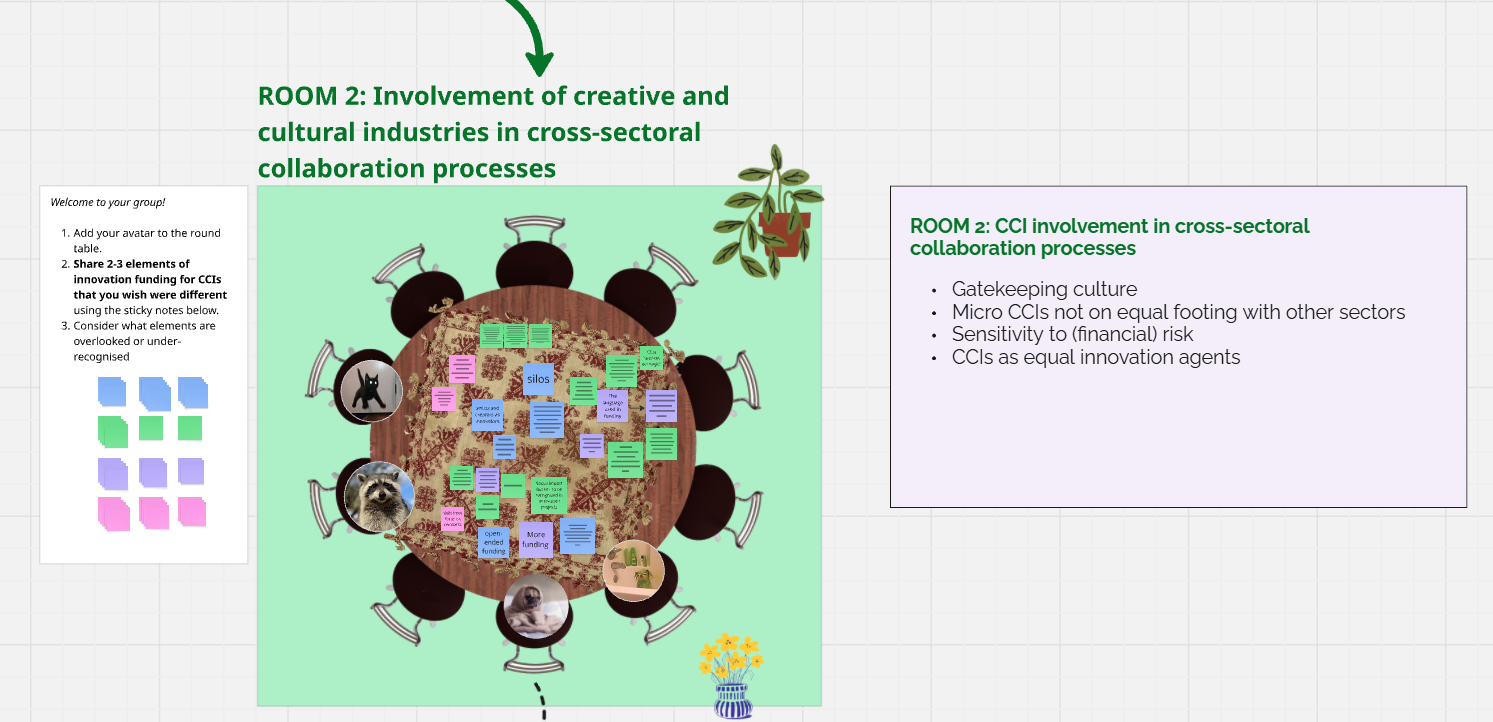
Participants were divided into three virtual rooms, each dedicated to a different dimension/theme of innovation funding for the CCIs. In every room, they responded to the same prompt: Share 2–3 elements of innovation funding for CCIs that you wish were different. Consider what elements are overlooked or under-recognised.
Themes:
Room 1: Recognition for artistic, cultural, and creative practices in innovation funding
Room 2: Involvement of creative and cultural industries in cross-sectoral collaboration processes
Room 3: Conditions and requirements that come with innovation funding
Outcomes:
In Room 1, participants felt that “artistic practices are only seen as an intervention” and that “creative practices are only included at the end phases of projects.”
In Room 2, participants pointed out that the language used in funding “forces people to think about innovation and making in a box” and that there is an opportunity to “really give the stage to the creators.”
In Room 3, participants noted that innovation funding “tends to solve policy problems over real life problems” and that “strong impact and ideas do not always have economic impact as a central value.”
Together, the breakout rooms create a collective map of insights that reveal how different facets of the topic intersect. By comparing perspectives, they begin to recognise shared patterns and tensions, learn from one another’s experiences, and lay the groundwork for the collaborative vision-building that continues in the zine-making stage.
Activity example from Room 2: Involvement of creative and cultural industries in cross-sectoral collaboration processes
04
mini-zine creation
Purpose: Translate the ideas, provocations, and insights from the discussions into visual artefacts that communicate alternative futures for the topic.
Participants work individually or in small teams to create 8-page mini-zines (including front and back covers). The zines offer a creative format for expressing critical perspectives, speculative ideas, and forward-looking scenarios.
(For an offline workshop, see this guide to making a zine out of 1 piece of A4 paper.)
Interior pages prompts:
Pages 1–2: Key statements, provocations, or questions
Pages 3–4: “What do I mean when I talk about X?” – Define your values, perspective, or point of departure.
Pages 5–6: “What if…” scenarios – What would happen or what needs to change for your statement to come true?
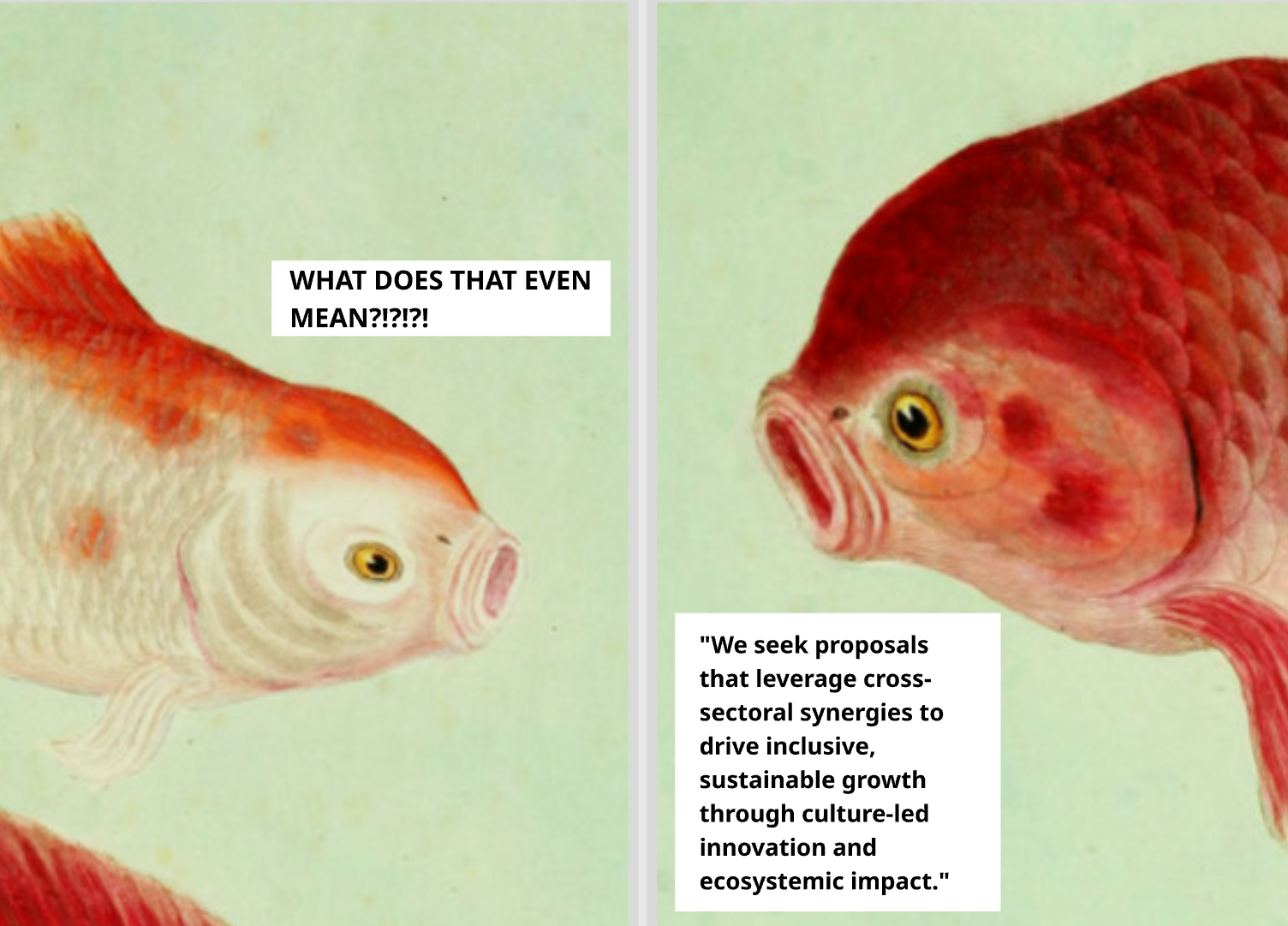
Front and back covers are free-form. Participants use text, collage, sketches, or digital imagery. Visual assets were drawn from public domain sources (e.g. Public Work by Cosmos, Web umenia, Public Domain Review, Wikimedia Commons) and encouraged to use the img.flip meme generator, with facilitators providing a shared repository of materials.
Note: Facilitators should check in at the midpoint of this step to support participants in developing their concepts, helping them find fitting metaphors, visuals, or narrative angles.
FOLLOW-ALONG EXAMPLE
The zine-making exercise helped surface tensions between how innovation is typically funded and how culture and creativity actually generate impact. A few broad key insights stood out:
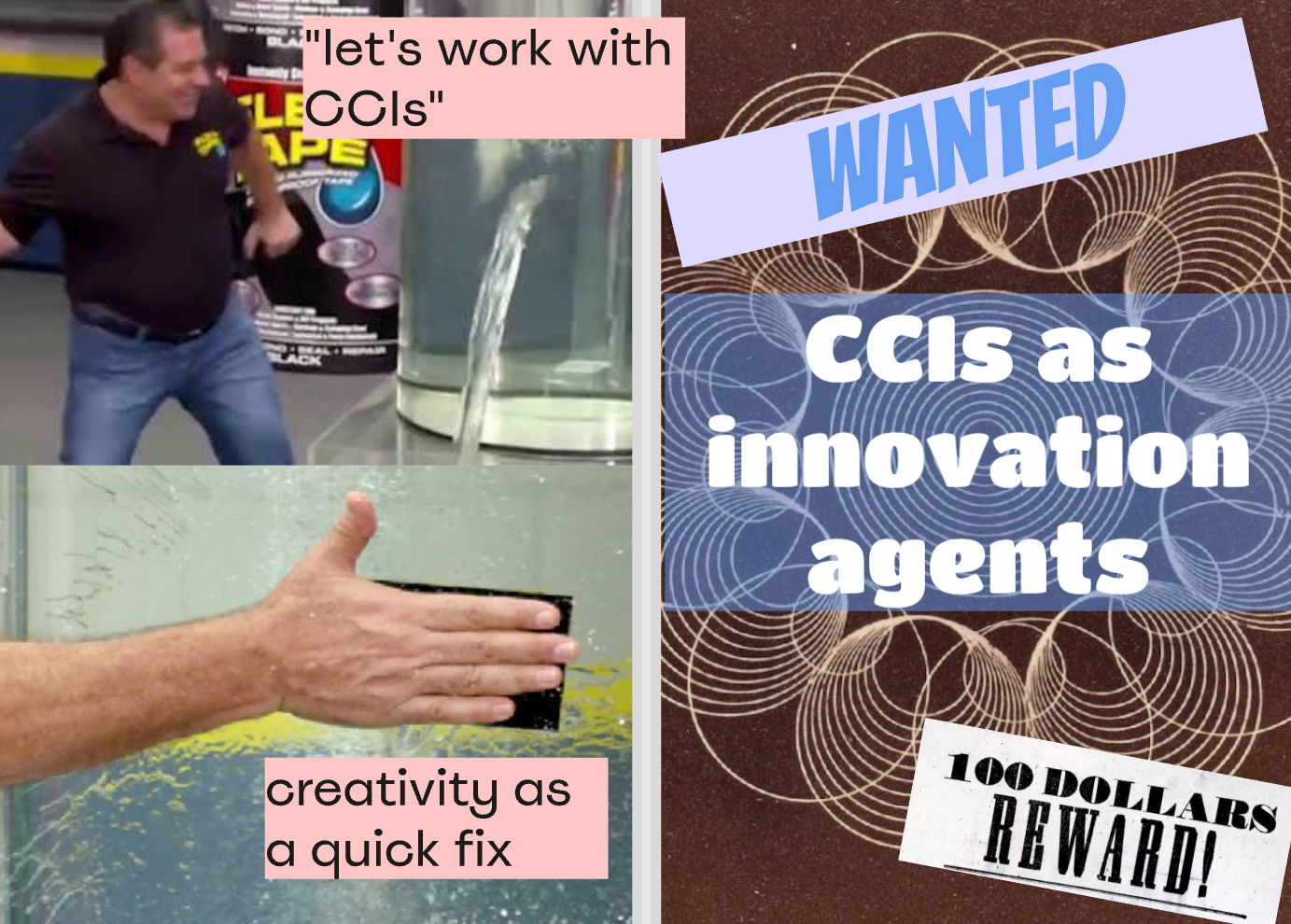
We must recognise that creativity isn’t a garnish or quick fix.
Innovation funding language is a barrier for the CCIs.
Creative and cultural work outgrows rigid project timelines. It needs flexible space for process, evolution, and work beyond fixed boundaries.
We must shape innovation strategies ourselves and reject the notion that we’re “risky.” Our sector delivers lasting value worth investing in.
Innovation shouldn’t chase novelty alone, we must diversify goals to derisk, demystify, scale down or slow down, and reduce inequalities.
A selection of sample mini-zine spreads below::
A full write-up of takeaways from the session can be read on the ekip blog here. You can now access the full zine with layouts co-created during these online sessions below:
Purpose: Consolidate learning, share insights, and identify key takeaways from the workshop experience.
Participants are invited to present their mini-zines and reflect on what they have learned about imagining new innovation scenarios for the CCIs.
Prompts:
What is one thing about imagining new innovation topic scenarios that you will take home with you from this session?
What key metaphors, visual elements, or recurring ideas emerged?
After the session, we offered participants the opportunity to receive a physical copy of the zine they made via mail. Alternatively, facilitators could invite people to print their zines themselves by downloading the images from the Miro board.
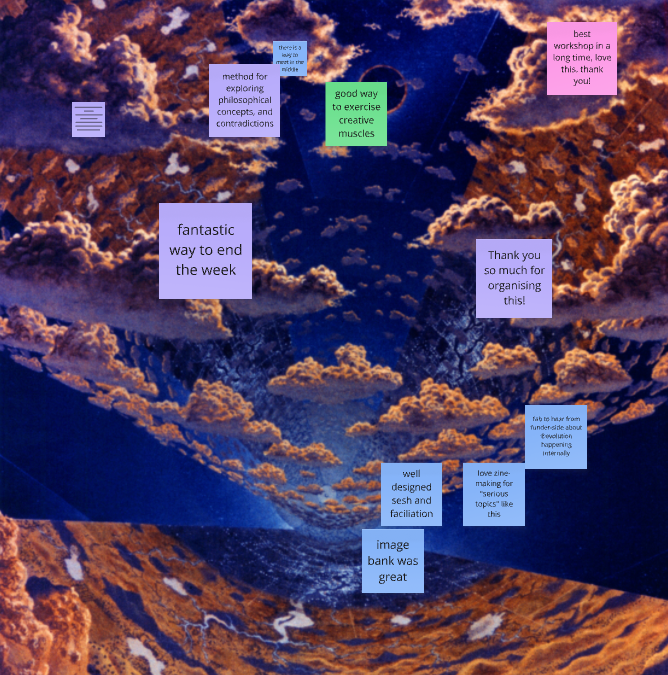
Activity responses from 27 June 2025 of the What’s the price tag of innovation? Hacking the future of CCIs sessions
Conclusion
By fostering creative exploration, critical reflection, and future-forward thinking, this workshop equips participants to reimagine how innovation topics such as funding could better align with the values, practices, and ambitions of the Cultural and Creative Industries. Through collaborative discussion and visual synthesis, participants generate new perspectives on how funding systems might evolve to support inclusive, sustainable, and culturally grounded innovation.
By integrating imaginative exercises into policy-related dialogue, ekip takes a step toward future-oriented, responsive, and impactful approaches to supporting the creative and cultural sectors across Europe. This workshop contributes to helping practitioners articulate their unique value propositions while building connections that support their engagement in collaborative innovation efforts.


 AI and Cultural and Creative Industries
 New European Bauhaus – CCIs enabling green transition
 Immersive Media
 Crafts-led Innovation
 Platformisation of the Music Industry
 Inclusivity in Video Game Industry
 Cross-Innovation with Performing Arts
 Fashion Transition: Eco-Design for Circularity
 Cultural Heritage Institutions within Open Innovation Ecosystems
 New funding models for creativity and innovation
 Spaces, infrastructures, and ecosystems for CCIs