More than coworking: Avenida CoLab as a multi-purpose space in a Portuguese mountain village
In a mountain village in central Portugal, Avenida CoLab turns an iconic former café into a coworking, community, and multi-purpose space. Run by Isabel Cudell Gouveia, it shows how patient, locally rooted infrastructures can hold together rural revitalization, creative work, and social integration in inner areas.
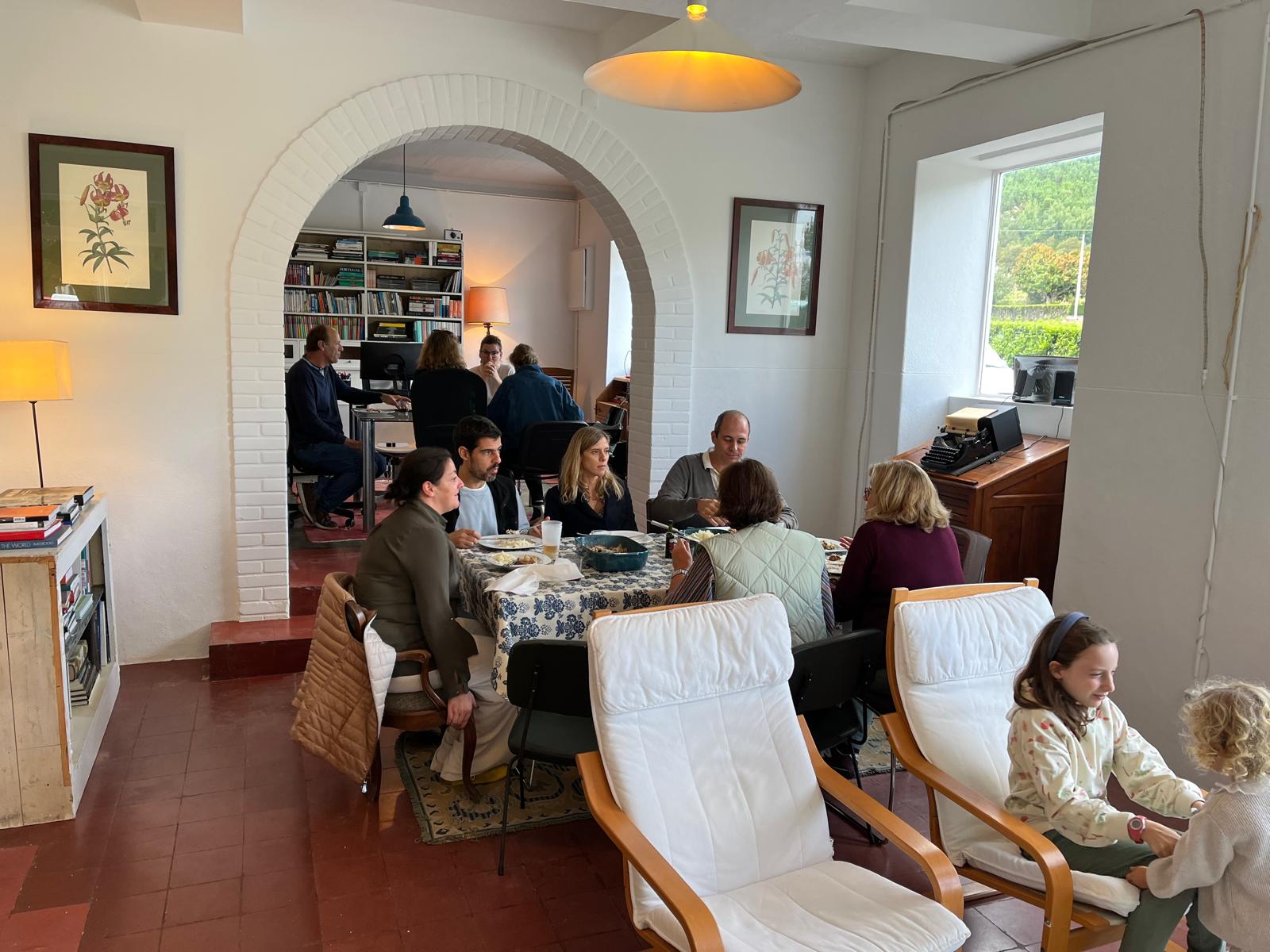 an Avendia CoLab event
-
Author
- Silvia D'Ambrosio, ekip (2026)
-
Audience
-
Geographical scope
-
Region
-
Resource type
Introduction
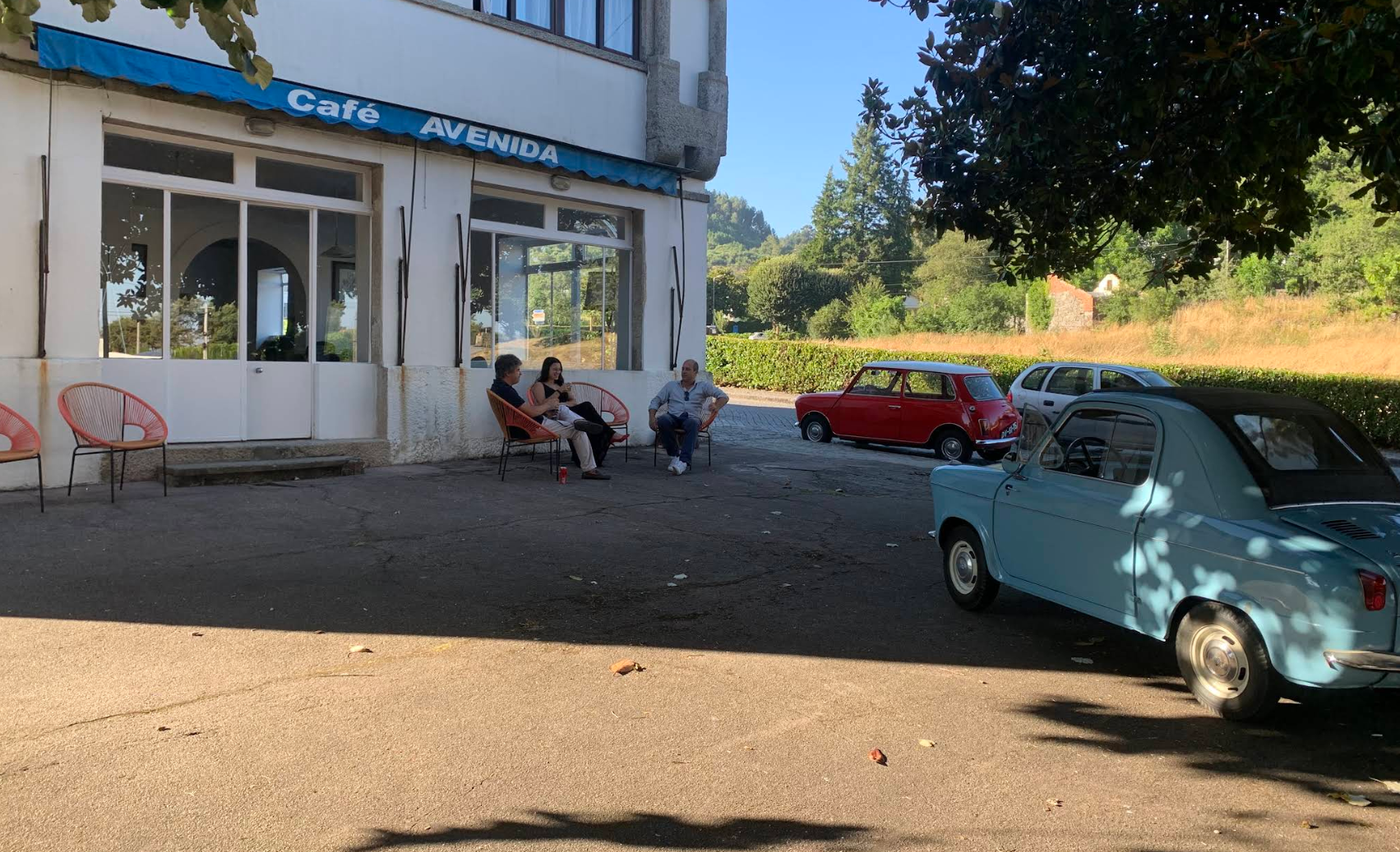
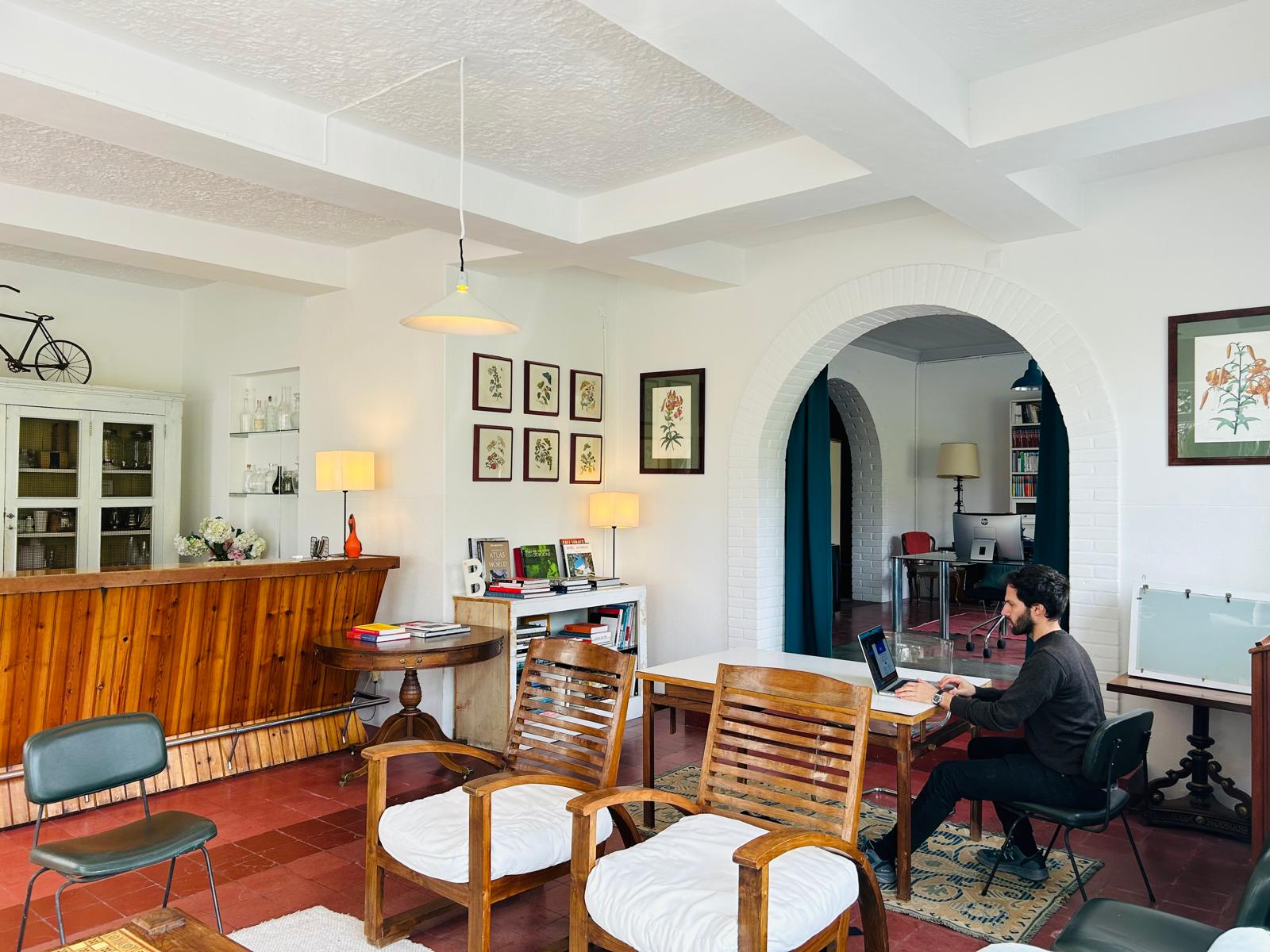
Avenida CoLab is a coworking, community, and multi-purpose space located in Caramulo, a small mountain village in central Portugal that gives its name to the wider Serra do Caramulo. Caramulo is, in itself, an unusual rural setting: it is one of the rare European examples of a remote village that has been able to bring in and sustain cultural and creative life over the long term, with a museum-led trajectory that has been running consistently since 1959. The space is run by Isabel Cudell Gouveia, who describes herself as a rural entrepreneur and has been with the project full-time for the past year, after more than two decades in the global mobility sector. Avenida CoLab itself has been physically in place for around six years, but it has only been a fully running reality for the past two. The building carries the memory of the village: it occupies the ground floor of what used to be the iconic Café Avendaño, the meeting point of the town from the 1960s and 1970s until it closed around the year 2000. The original windows, the sign of the old café, and the central position on the village avenue are all kept as part of the local heritage.
The space is not only a workplace for digital nomads and visitors, but an open infrastructure where the community gathers, the town hall hosts events, immigrant families find a second home, and cultural and creative initiatives slowly take root. It also shows what it takes to keep a CCI ecosystem alive in a remote area: patience, presence, and the daily availability to listen. As Isabel puts it, what is needed in such places is a space able to function as a long- term support infrastructure for those who choose to live in rural areas, where, with patience, uses and connections start to show up.
Organizational Context
Caramulo is a small village with a remarkably innovative past. In the 1920s, thanks to the pure mountain air, it was set up as a sanatorium village for the treatment of tuberculosis, and several sanatoriums were built on the slopes. With the discovery of antibiotics, the original founders and their descendants quickly reoriented the village toward tourism. In 1959, a member of the founding family opened the Museu do Caramulo, which has since been managed by the same family across four to five generations. The museum, today one of Portugal’s significant cultural attractions, hosts both art collections and a collection of classic cars, and is at the core of a longer-term strategy to turn Caramulo into a “museum village”: three additional buildings are already part of the constellation, and four more are on the way. For Isabel, this trajectory makes Caramulo a rare European example of a remote rural place that has been building cultural infrastructure consistently since 1959.
Avenida CoLab sits within this longer story and within the contemporary policy framework of rural revitalization and the New European Bauhaus. One of the first projects developed together with Rural Radicals was a NEB application for the rehabilitation of an old building in the village, the former cine-teatro that had hosted plays and films for tuberculosis patients in the 1930s and 1940s, and that lies abandoned today. The application was developed alongside other rehabilitation projects in the Italian Alps, Austria, Germany, and Georgia, and did not win the grant among the hundreds of applications received. It still marked, in Isabel’s words, the entry into the world of CCIs, NEB values, and European cultural funding, and several of the principles that were anticipated then are starting to materialize now.
Challenges and Opportunities
The first relevant challenge Avenida CoLab faces is what Isabel calls a “catch-22”: without offer there is no demand, but without demand there is no offer. In a mountain village with around four months of seasonal tourism a year and very little business activity outside that window, financial sustainability cannot be measured year by year. Avenida CoLab is, in Isabel’s reading, less a business and more a long-term support infrastructure for those who choose to live in or come back to rural areas. The implication for funders and policymakers is significant: viability needs to be evaluated over multiple years, with the understanding that the first phase may be structurally non-sustainable.
A second challenge sits at the level of culture and pace. Cities, Isabel observes from her own previous experience, run on what she describes as a hamster race. Rural revitalization runs on a slower clock, where the same week may produce no visible result and then, suddenly, a community event that reminds everyone why the project exists. Holding this slower clock requires patience and a kind of belief that is hard to capture in standard innovation metrics.
A third tension is the one between intangible value and tangible measurement. Isabel notes that many European funding mechanisms tend to reward measurable, tangible outputs, while what is actually being built in a place like Caramulo is mostly relational and intangible: encounters, trust, the slow re-emergence of a local economy. This is also where Isabel locates the biggest opportunity. Post-pandemic shifts and the rise of digital nomadism have made rural areas more attractive again, and the museum’s ongoing expansion will inevitably generate demand for restaurants, hotels, and workers. The window of opportunity is real, but it depends on cultural and creative actors being present in the village ahead of that demand, not after.
Open Innovation Ecosystems
For Avenida CoLab, open innovation is built in the everyday practice of being available. Isabel has noticed that the most important shift in the past year, since dedicating herself full- time to the project, has been simply having the time to stop, look up, and have a conversation when someone walks past or knocks on the door. The space functions, in her phrase, as an “I am open” sign, and most of what has emerged has emerged from this availability.
The ecosystem around Avenida CoLab is multi-layered. At the village level, the space hosts events that the municipality could not easily host elsewhere: a press conference for a mountain gastronomy event, organized in a neutral venue so that no individual restaurant would feel passed over; cinema viewings; and the openings of major town events in early September. The relationship with the town hall is described as fundamental, and Isabel makes a point of attending its events for the networking, including a recent New European Bauhaus satellite event held in the wider municipality.
Avenida CoLab also collaborates with the Centro de Estudos e Interpretação da Serra do Caramulo (CEISC), a largely unfunded association of local teachers, physicists, and biologists who publish small books on the fauna and flora of the mountain and try to keep traditional crafts alive, including local linen-making. From this collaboration, an early pilot has taken shape around guided trails on the mountain. The two-hour trail led by two teachers, one of them with his seventeen-year-old son, lasted three and a half hours because of the depth of knowledge involved, and ended with the participants spontaneously contributing 15 € each, the going rate for a comparable guided trail near Lisbon. The donation went to the association.
The network reaches further still through the unexpected skills the village quietly hosts. Lisa, an Ecuadorian National Geographic videographer married to a mechanic working in the museum’s classic car workshop, has started collaborating with Avenida CoLab as a nature guide and professional photographer, helping promote the territory while reducing her time on long-distance expeditions.
An important and distinctive thread of the ecosystem is its social dimension. The village is seeing a small but growing immigrant population, especially from African countries, often employed in care work in former sanatoriums now turned into private homes. Drawing on her own experience as an expat kid, Isabel has made Avenida CoLab a deliberately welcoming space for these families and has helped establish a local association for the integration of immigrants, headquartered at the CoLab. The same dynamic has had a ripple effect on the village’s infrastructure: the local preschool, which had closed for lack of children, has now reopened thanks to the new immigrant families. As Isabel puts it, the whole society works in chain, and a CCI infrastructure in a rural setting cannot be separated from the social fabric that makes the territory liveable in the first place.
The value generated across these relationships is at once cultural, social, economic, and educational, and it accumulates slowly.
Measurable Outcomes
Avenida CoLab does not work with a formal set of indicators, and Isabel is openly critical of evaluation frameworks that reward only tangible outputs. The outcomes that emerge from the interview are instead qualitative and embedded in the life of the village. The most concrete include the establishment of a local immigrant integration association headquartered at the CoLab; the reopening of the village preschool driven in part by the new immigrant families; the hosting of municipal events that previously had no neutral venue; the early functioning of a guided-trail offer in collaboration with the CEISC; and the enhancement of unexpected skills already present in the village, from teachers turned guides to a National Geographic videographer.
For Isabel, the most reliable indicator of impact is also the most difficult to count: the increase in conversations and chance encounters that the space generates simply by being there and being open. The strongest message to policymakers that emerges from the case is precisely this: that evaluation frameworks for rural cultural and creative infrastructures need to take seriously the intangible, slow-accumulating value of relationships, presence, and trust, and to extend their time horizons accordingly. As Isabel emphasizes, it is absolutely key that such projects continue to exist, and to keep working to bring people out of the cities and into the villages, with cultural and creative industries at the heart of that movement.
For more information on Avenida CoLab, see here.