Innovation vs Cultural Policy: why they matter for the cultural and creative industries
This article examines how innovation and cultural policy intersect in the Cultural and Creative Industries (CCIs). It shows how CCIs drive social and artistic innovation and how policies can support their role as key agents of cultural and societal transformation.
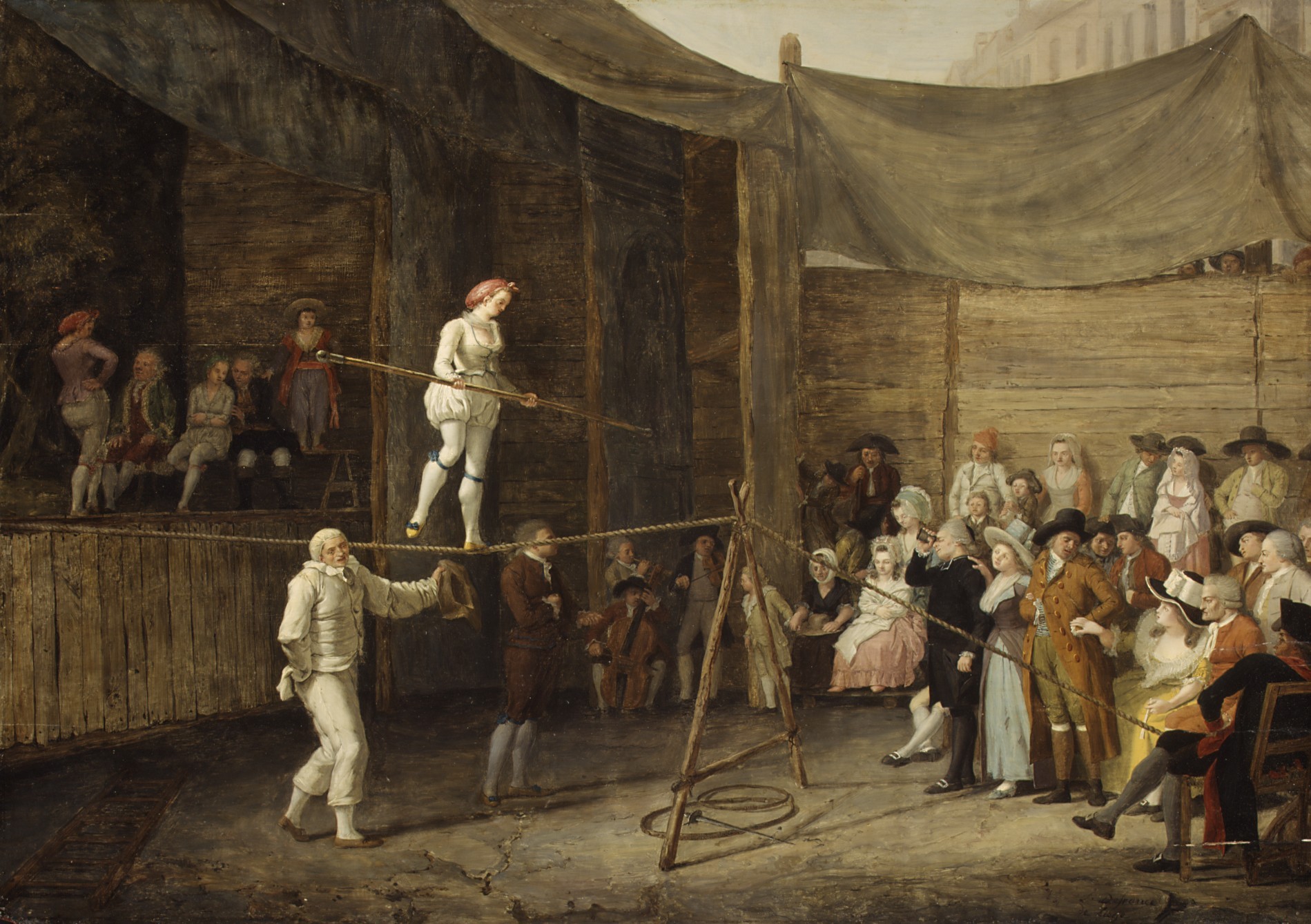 The Rope Dance by Léonard Defrance (1735–1805)
-
Author
- Isabel Beirigo, ekip (2026)
-
Audience
-
Resource type
There is a lot of discussion around innovation— including its role in and for the Cultural and Creative Industries (CCIs). The ekip project, for example, focuses on a collaborative platform to better involve CCIs as ‘agents’ of innovation across sectors, shaping cultural policies. The Creative Europe programme, as well as EIT Culture & Creativity initiative, fund and encourage innovative approaches to content creation, distribution and cross-sector co-creation across the Cultural and Creative Sector.
Despite this attention, the concepts of “innovation” and “cultural policy” remain loosely defined, and there is no clear consensus about what they actually mean or how they relate to one another. Understanding how they differ, and where they overlap, is key for artists, creative entrepreneurs, cultural organisations, and policymakers who want to strengthen the sector’s role in society.
This article is drawn from research conducted within the ekip project by Vanessa Monna, combining insights from focus groups with analyses of key studies, including Creative Flip (2019), OMC on Innovation and Entrepreneurship (2018), and CCS Ecosystems: Flipping the Odds (2020), to clarify these concepts and their implications for the sector.
What does innovation in the cultural and creative industries mean?
Innovation in the CCIs should be understood more broadly than simply new technologies or digital tools. It encompasses new ways of improving people’s well-being, strengthening society’s resilience in times of crisis, and offering creative solutions to social challenges. If understood as such, innovation may appear in artistic practices, audience engagement, community participation, and new business models.
CCI actors, especially small companies, micro-enterprises, and individual artists may not always see themselves as part of an “innovation ecosystem.” Yet they constantly experiment with innovative formats: through storytelling styles, participatory projects, hybrid cultural-digital experiences, and even through new ways of organising their work. Inspiring examples can be found in Prototyping Innovation in Cities and the case study on Scottish disabled-led social enterprise, Collective Text (linked below).
Takeaway: Recognising these forms of innovation allows CCIs to claim their role as essential drivers of social and cultural transformation.
Innovation matters for cultural policy
Cultural policy has long supported artistic freedom, cultural participation, and sustainable cultural ecosystems. At the same time, European research and innovation policies such as the Horizon Europe programme, are increasingly focused on solving major societal challenges. These initiatives often involve scientific and technological projects aimed at boosting competitiveness and supporting green and digital transitions.
This context offers CCI actors an opportunity to build a stronger narrative about their contribution to social innovation, regional development, education, health, and digital transformation. By broadening their understanding of innovation, cultural actors can see themselves not just as artists or entrepreneurs, but as active participants in innovation ecosystems.
CCIs have a unique capacity to drive social change. When artists, creative entrepreneurs, and cultural organisations recognise their own innovative potential, they can create stronger partnerships with cities, businesses, universities, and social organisations, generating growth and societal impact. This is especially powerful at the local level, where CCIs help shape communities, attract visitors, and strengthen social cohesion.
Takeaway: Understanding their innovative role allows CCIs to integrate more fully into broader innovation ecosystems and highlight their social impact.
What can cultural policy do for the cultural and creative sector?
Cultural policy provides the conditions that allow culture to thrive: funding schemes, infrastructure, professional support, legal frameworks, and international cooperation. Capacity building – or better, lifelong learning – organised by cultural centres, museums, and cultural organisations, equip CCI professionals to respond to changing conditions such as AI and other new technologies (ekip examples below). These measures remain a key instrument in helping professionals adapt to ever-evolving contexts.


At the same time, networking and partnership-building may deliver stronger results than focusing only on individual skills. Creative hubs, cross-sector partnerships, and cooperation programmes at EU level help CCI agents overcome barriers such as limited access to funding. As we have seen in previous Future Forward Hackathons (linked below) and the ekip Academy, for example, networking opportunities can be a valuable resource for professionals in the sector.

However, policymakers still lack clarity on future directions regarding the interconnection between the cultural sector and innovation initiatives. These initiatives are often not designed for CCIs, and CCI actors do not recognise themselves as drivers of innovation. In order to enhance the benefits of cultural policy and innovation for CCIs actors, it’s necessary to recognise creative actors as innovation drivers, building stronger evidence of their social impact, and shaping policies that support both cultural value and societal transformation.
Takeaway: By positioning creative actors as key innovators, cultural policy can simultaneously support cultural development and societal progress.
See also: