Cultural Policymakers: who are they and where to find them?
This article explores how cultural policymaking has evolved beyond traditional arts policy, and why recognising who cultural policymakers are today is crucial for connecting cultural and creative industries with innovation, sustainability, and wider societal agendas.
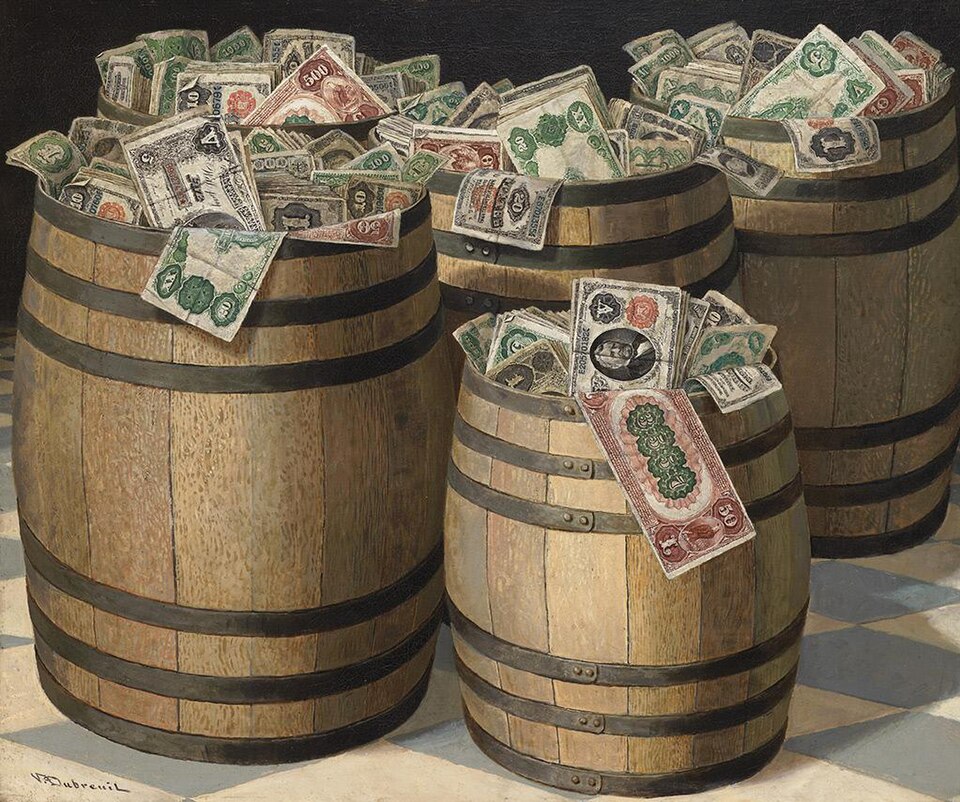
 Untitled image by Thomas Smillie (1890-1913)
-
Author
- Marlene Dirven, ekip (2026)
-
Audience
-
Geographical scope
-
Resource type
When discussing cultural and creative industries (CCIs) in relation to innovation or sustainability, one role frequently appears but is rarely defined: the cultural policymaker.
While the concept may seem self-evident to those working within public administration, it often remains blurry for actors outside policymaking; especially for creative entrepreneurs, and people working in the arts.
This lack of clarity has a reason: cultural policymaking has evolved significantly over recent decades.
Understanding who cultural policymakers are today therefore requires first understanding what cultural policy means, and how it has evolved beyond solely the cultural sector.
Why it is difficult to identify cultural policymakers
For many people working in or with CCIs, cultural policymakers are often imagined as distant figures: officials in ministries of culture, arts councils, or public funding bodies. This narrow perception makes cultural policy appear as something that happens to the sector rather than with it: and cultural policymakers as people who make sure that art and cultural heritage exists and evolves, but who don’t directly appear and engage as ‘makers’ themselves.
Several factors contribute to this blurred understanding:
- Cultural policy is rarely communicated as a distinct or visible policy domain compared to areas such as economic, industrial, or innovation policy.
- Cultural policymaking increasingly takes place across multiple levels of governance: local, regional, national, and European. This makes it harder to pinpoint where decisions are made.
- Many policies that affect culture are not labelled as ‘cultural’ necessarily, but as ‘technological’ or ‘economical’, disguising where cultural policymaking is taking place.
As a result, cultural policymakers are often invisible to those most affected by their decisions, even when their influence is significant.
Cultural and innovation policy
This lack of clarity is compounded by broader questions about access, legitimacy, and representation within cultural policy. As Martin Poprawski, ekip member and lecturer at HUMAK University of Applied Sciences in Helsinki, explains,
“There’s a need to ensure that those
shaping culture are aligned with the
values society wants to uphold –
whether it’s preserving heritage,
encouraging artistic expression,
or promoting inclusivity.”
Indeed, cultural policy must suit the needs and values of a specific time and place. But who is legitimate to ‘shape culture’, and fill in the content of such values?
(More from Poprawski and Katarina Scott with Future by Lund at the article below.)

In contemporary policy debates, the question of what cultural policymaking entails and who can be involved has become especially important in the context of European innovation agendas and cross-sector collaboration, where responsibilities and decision-making are often distributed across multiple policy domains. As a result, cultural policy and innovation policy are increasingly intertwined. However, a lack of clarity around cultural policymaking can limit the effectiveness of both cultural and innovation policies, leaving the valuable contributions of CCIs to society insufficiently recognised.
CCIs at the forefront of innovation
Understanding who cultural policymakers are and where they work, requires an understanding of how cultural policymaking has evolved over the past decades.
Traditionally, cultural policy focused primarily on public funding for the arts, heritage protection, and support for cultural institutions. Over time, however, this understanding has expanded. Cultural policy has progressively incorporated broader societal objectives linked to the Sustainable Development Goals (SDGs), including social inclusion and community cohesion, education and lifelong learning, urban and regional development, democratic participation and freedom of expression. More recently, cultural policy has also become linked to innovation, digital transformation, and economic competitiveness.
This evolution of cultural policymaking reflects a broader shift in how culture is understood: not only as an end in itself, but also as a driver of social, economic, and technological change. And as our notion of culture and cultural policies are evolving, the multiple roles and values of CCIs have started expanding as well. CCIs are now widely recognised as contributors to social cohesion and democratic participation, regional development, and sustainability and green transitions. They can help Europe move forward both as a technology-enabled sector in their own right (through, for example, the use of AI in the arts or the rise of streaming in film and music – read about other policy areas here) and by stimulating innovation beyond their own sector through collaboration with other industries.
This shift creates huge potential for CCIs to play a role in shaping the European future. Yet CCIs, as well as traditional policymakers, often don’t recognise their sector as one where innovation can happen. Because of this lack of recognition both within and outside the cultural sector, CCIs are still largely left out of innovation policy discussions. This is where the relevance of the cultural policymaker comes in, as they can form the bridge between the CCIs and collaboration with other sectors.
Identifying cultural policymakers
Cultural policymakers can help envision a future in which CCIs are no longer confined to a perceived dusty corner, but are visible at the forefront of new developments, with experiences and insights that matter for shaping both innovation and cultural policy. This opens up stronger opportunities for cross-sector collaboration and greater room to invest in innovation within the sector itself, while enabling CCIs to contribute more fully to Europe’s broader innovation landscape. Identifying cultural policymakers is therefore a crucial step in realising the potential of CCIs.
The evolving nature of cultural policymaking invites a broader understanding of contemporary cultural policymakers. Where they were traditionally working as officials within ministries or departments of culture, public agencies responsible for arts funding and cultural infrastructure, or regional or local cultural departments managing cultural programmes, now their work depends on collaboration with actors outside the traditional cultural policy sphere, across multiple governance levels, within policy domains not explicitly labelled as ‘cultural’, and in organisations that frame priorities, produce knowledge, or enable collaboration across sectors.
For cultural and creative sectors seeking to engage with innovation ecosystems, this broader perspective is essential. Identifying cultural policymakers becomes less about locating a single authority and more about mapping a complex policy landscape where culture, innovation, and societal goals increasingly intersect.
Mapping the invisible
The search for contemporary cultural policymakers leads us away from traditional institutions or ministries, and toward a more integrated landscape. Today, they are just as likely to be found within departments of Economic Affairs or Digital Innovation as they are in art institutions.
Identifying cultural policymakers therefore requires looking for the “translators”, officials and strategists who recognise CCIs not just as beneficiaries of funding, but as essential partners in solving societal challenges. By locating these cross-sectoral allies, the creative sector can transition from the periphery of policy to the center of the European innovation agenda, ensuring that cultural values remain at the heart of our collective future.